

Scaling Production for SEO Content: A Practical Playbook for Sustainable Growth
Scaling SEO content production means scaling seo content production in a controlled way, so optimized publishing output grows while strategy, review capacity, brand voice, and performance feedback stay aligned. For example, a team can publish 4 strong articles per month and still grow faster than a team that ships 30 weak pages with no search fit.
The pressure has grown because search now includes classic results, featured snippets, and AI answers that pull from clear, useful, well-structured pages. Meanwhile, many founders and marketers still run SEO through scattered spreadsheets, manual briefs, copy edits, CMS formatting, and delayed approvals. The gap between demand and capacity often becomes visible after the first missed publishing week.
This playbook shows how to set a realistic cadence, assign roles, automate the right tasks first, and track whether added volume creates growth. Additionally, you will see separate paths for founder-led teams, small marketing teams, and agency or enterprise operations. You will also get a simple publishing velocity model that ties output to review capacity.
Why scaling seo content production breaks without capacity planning?
Scaling seo content production breaks when teams increase drafts faster than they increase review, publishing, and performance tracking capacity. The common failure point is not idea generation. Instead, the failure point is often the human work needed to check a draft, align the angle, add internal links, format the page, and approve publication.

A simple time-budget audit exposes the limit. If one reviewer has 8 hours per week for content and each article needs 90 minutes of human review, that reviewer can approve about 5 articles per week. However, add 30 minutes for CMS checks and the limit falls to 4 articles.
Rule of thumb: treat one finished SEO article as 2 hours of human attention unless your workflow already automates briefs, optimization, formatting, and publishing.
One founder-led SaaS scenario shows the issue clearly. The founder wants 12 articles per month, but can only spend 3 hours per week reviewing content. At 2 hours per article, the real output ceiling is 6 articles per month, unless review rules or automation change.
Capacity planning also protects search quality. A page is more likely to rank when it answers a real query, targets the right intent, and earns enough trust signals to deserve visibility. Therefore, more pages help only when each page meets that standard.
Choose a Sustainable Publishing Cadence by Team Size
| Team Size | Realistic Monthly Output | Core Roles | Review Capacity Needed | Scaling Risk to Watch |
|---|---|---|---|---|
| Founder-led | 4-8 articles | Founder, automation platform | 2-4 hours weekly | Slow approvals |
| Small marketing team | 8-20 articles | SEO owner, editor, publisher | 5-10 hours weekly | Review backlog |
| Agency pod | 20-60 articles | Strategist, editor, QA, publisher | 12-30 hours weekly | Brand drift |
| Enterprise operation | 60+ articles | SEO lead, SMEs, editors, ops | 30+ hours weekly | Governance gaps |
A sustainable cadence starts with review capacity, not writing capacity. If your team can review 10 articles per month, then 10 publish-ready articles is the ceiling until automation removes tasks or another reviewer joins the process.
Small teams can often publish 4 to 8 articles per month with one reviewer and one clear approval lane. Likewise, a two-person marketing team can reach 8 to 20 monthly articles when research, briefs, internal links, and CMS formatting run through a repeatable system.
Watch out: a jump from 4 to 16 articles per month is a 300% output increase. Without a matching change in review capacity, the queue grows faster than traffic.
Use publishing velocity as a working model. Monthly output equals available review hours divided by review hours per article, then adjusted for CMS and coordination time. For example, 24 monthly review hours divided by 1.5 hours per article supports 16 reviewed articles before publishing overhead.
How should small teams divide SEO content production, research, drafting, review, and publishing for scaling?
Small teams should divide SEO content production into four clear lanes: query research, brief creation, draft production, and final publishing. The same person can own more than one lane. However, no article should move forward without a defined reviewer and a defined publishing owner.
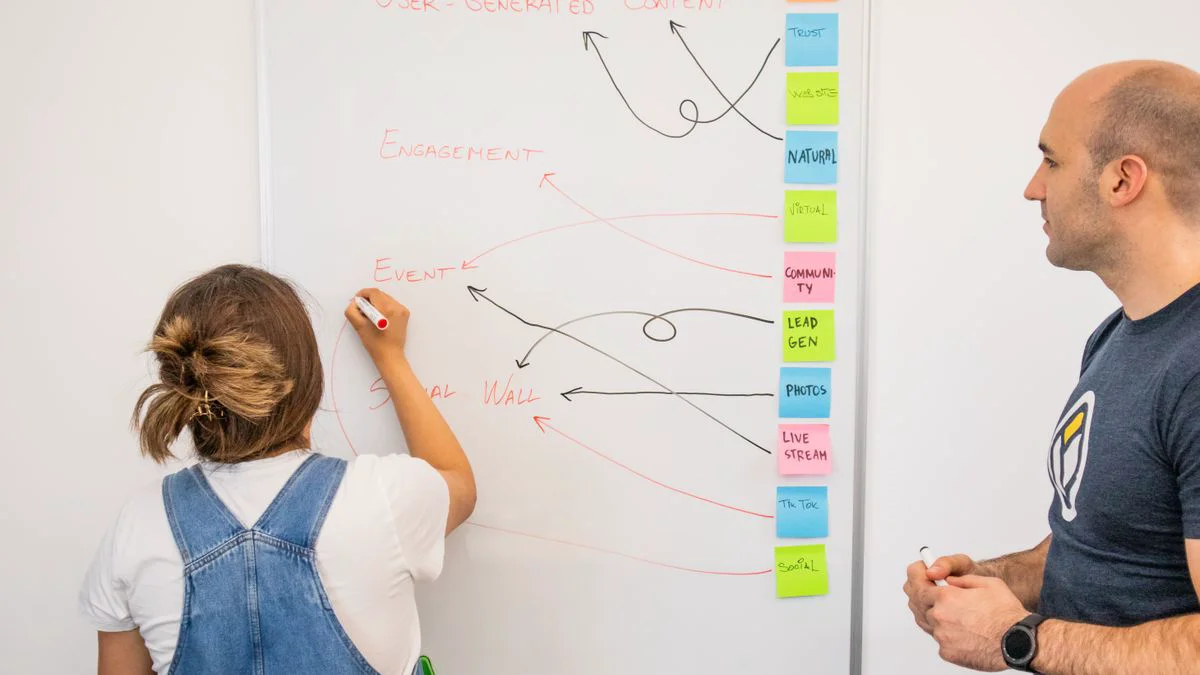
Founder-led path for controlled scaling
A founder-led team should keep strategy and approval with the founder while automating the most repeatable tasks. Query discovery, outline creation, draft generation, on-page checks, and CMS formatting can move faster through software than through manual work.
The founder should review angle, claims, examples, and product fit. That review often takes 30 to 60 minutes when the draft already matches the query and structure. If the founder rewrites every article from scratch, the workflow has not scaled.
A practical founder cadence is one review block twice per week. Each 90-minute block can approve 1 to 2 articles if the content arrives with a clear brief, search intent, draft, meta title, and internal link suggestions.
Small marketing team path for repeatable output
A small marketing team should assign one person to own the calendar and one person to own quality. The calendar owner manages topics, publication dates, and keyword coverage. The quality owner checks usefulness, brand voice, factual claims, and conversion paths.
The team can use automation to speed up briefs, outlines, drafting support, internal linking, and publishing. For a broader view of automation controls, read the pillar on building quality controls into automated SEO content.
Tip: limit each article to one primary search intent and one primary business goal. Teams lose hours when a single page tries to rank for 6 unrelated queries.
A clean handoff also matters. A draft should enter review with the target query, intent, outline, suggested title, meta description, internal links, and CTA already attached. As a result, that package can reduce review confusion in many small-team workflows.
What changes when an agency or enterprise scales SEO content?
Agency and enterprise teams need stronger governance because higher output creates more places for errors, duplicated topics, weak claims, and brand drift. At 20 or more articles per month, team structure matters as much as writing speed.
An agency pod usually needs a strategist, editor, QA owner, and publishing operator. First, the strategist chooses topics and intent. Then the editor protects clarity and brand voice. Next, the QA owner checks claims, links, formatting, and missing sections. Finally, the publishing operator handles CMS delivery and status tracking.
Enterprise operations add subject-matter reviewers and legal or compliance checks for sensitive categories. A 60-article monthly program can involve 5 or more approval paths if product, legal, regional, and brand teams all review different page types.
Scaling content works when every handoff removes uncertainty. If a draft creates new questions at each stage, output volume only multiplies the bottleneck.
Automation should reduce handoffs, not hide them. For example, CMS API publishing can move approved content directly into the right format, category, slug, and draft status. Teams that want fewer manual CMS steps can review how CMS integrations reduce publishing handoffs.
Agencies also need client-level controls. One client may accept AI-assisted drafts after editorial review, while another may require subject-matter approval before publishing. A shared workflow can support both, but the approval rules must differ.
How do you build a content calendar around real customer queries?
A content calendar should start with real customer queries, not internal campaign themes. Search demand becomes useful when each topic maps to intent, funnel stage, product relevance, and review difficulty.
Begin with customer questions from sales calls, support tickets, demo objections, site search logs, and organic query reports. Then group related questions into clusters. A cluster may include one comparison article, three problem-solving articles, two buying-intent pages, and several support-led explainers.
Automation helps most during keyword research and content ideation because those tasks require pattern matching across many queries. Additionally, a platform can help find long-tail questions, group similar topics, suggest intent, and flag content gaps faster than a fully manual process. Manual research can still shape strategy, but it should not block the calendar every week.
Content briefs keep the calendar usable. Each brief should state the target query, search intent, reader problem, required sections, internal link targets, expert notes, and approval owner. Otherwise, a 10-article batch without briefs often creates 10 separate debates.
Publishing cadence should follow capacity. A team with 12 approved briefs and 4 weekly review hours should schedule 2 articles per week, not 5. Consistency can give search engines and AI systems more stable signals than burst publishing followed by 6 silent weeks.
For teams that publish often, CMS scheduling and API workflows prevent last-mile delays. The practical details of automating CMS publishing steps matter once formatting becomes a weekly time sink.
What should you automate first when content production is too slow?
Teams should automate the highest-volume, lowest-judgment tasks first, then keep human approval on strategy, facts, brand voice, and final publishing rules. This order saves time without turning SEO into blind page generation.
- Audit one month of content work and record minutes spent on research, briefs, drafting, editing, formatting, and reporting.
- Automate query discovery and topic clustering before adding more draft volume.
- Standardize content briefs so every draft starts with intent, structure, and internal link targets.
- Use drafting support only after the brief process produces consistent article direction.
- Automate on-page checks for titles, headings, meta descriptions, schema needs, and internal links.
- Connect approved content to CMS publishing so formatting does not consume editor time.
- Track rankings, clicks, updates, and decay so older pages keep earning traffic.
The order matters because automated drafting without better research can produce more pages for the wrong questions. Similarly, automated publishing without review can push errors live faster. A safer model uses automation to prepare work, then uses humans to approve judgment-heavy decisions.
Common mistake: automating drafting before briefs often increases editing time. A weak brief can add substantial review work to every article.
Tools in this category can fit this model when they help analyze visibility, identify customer search queries, create optimized content, publish to connected websites, and track results over time. Teams that want the full flow can see how Seonix moves from site analysis to published and tracked content.
Automation stack workflow for scaling SEO content production
At this stage, scaling seo content production depends on a clear stack, not just another writing tool. The workflow below shows where software should speed up repeat tasks and where people should keep control.
| Workflow Step | Automation Layer | Human Control Point | Output |
|---|---|---|---|
| 1. Visibility and query analysis | Search query discovery, topic clustering, content gap detection | Approve business relevance and priority | Validated topic queue |
| 2. Brief and outline creation | Intent mapping, section planning, internal link suggestions | Confirm angle, audience, and product fit | Review-ready content brief |
| 3. Draft and optimization | Draft support, title checks, heading checks, meta description checks | Review claims, examples, voice, and usefulness | Approved article draft |
| 4. CMS publishing | Formatting, category, slug, draft status, scheduling, API delivery | Final publish approval | Live or scheduled page |
| 5. Tracking and improvement | Indexing, rankings, clicks, decay monitoring, update alerts | Choose refreshes, redirects, and expansion priorities | Performance feedback loop |
Which metrics show scaling SEO content production is working instead of just creating more pages?
Scaling works when more published pages produce more qualified visibility, engagement, and business outcomes. Page count alone does not prove progress because a site can add 100 pages and still miss the queries buyers use.

Track both production metrics and performance metrics. Production metrics show whether the system moves work smoothly. Meanwhile, performance metrics show whether the pages earn useful visibility after publication.
- Cycle time: days from topic approval to published page.
- Review time per article: editor minutes spent before approval.
- Publishing hit rate: planned articles published on schedule.
- Indexing status: pages discovered and eligible for search results.
- Ranking movement: target queries moving into top 20, top 10, and top 3 positions.
- Organic clicks: traffic from non-paid search results.
- Conversion assist: leads, signups, demo requests, or sales influenced by content visits.
- Content decay: pages losing clicks or rankings after earlier gains.
A useful scorecard reviews new pages after 30, 60, and 90 days. Early signs include indexing, impressions, and rank movement. Later signs include clicks, assisted conversions, internal link value, and mentions in AI-generated answers.
Rank tracking and decay monitoring prevent wasted volume. If 20 older pages lose traffic while 20 new pages launch, total output may hide a flat growth curve. Therefore, the team should update decaying pages while still publishing new content.
Quality metrics matter too. Track how many drafts need major rewrites, how often reviewers find factual issues, and how often articles miss intent. If more than 25% of drafts need heavy revision, scale the brief and review system before increasing volume.
How do you control risk while growing SEO content output?
Risk control keeps automation useful by defining what software can do alone, what needs human review, and what requires expert approval. The higher the business risk, the more explicit the approval rule should be.
Low-risk tasks include formatting headings, checking meta length, suggesting internal links, building article outlines, and scheduling approved posts. Medium-risk tasks include drafting claims, writing comparisons, and adapting brand voice. In contrast, high-risk tasks include legal claims, medical advice, financial guidance, pricing details, and product promises.
A simple governance rule works well: automate preparation, require human approval for publication, and require expert approval for sensitive claims. This rule supports speed without giving up accountability.
Before you increase output, run a risk check across topics, claims, review roles, and tracking. A practical SEO automation risk checklist can help teams catch weak controls before they multiply across dozens of pages.
Quality assurance should stay short enough to use every time. Check query match, outline coverage, factual accuracy, internal links, CTA fit, duplicate angles, title clarity, meta description, and publication formatting. In addition, a 9-point check used weekly beats a 40-point document nobody opens.
Compact quality control scoring rubric
Publish threshold: publish at 85 points or higher when no factual or compliance issue is present. Revise articles scoring 70 to 84 before scheduling. Hold anything below 70, or anything with unresolved factual risk, until the brief or draft is corrected.
Worked example: a small marketing team has 20 review hours per month. If each article needs 75 minutes of review and 15 minutes of publishing checks, each finished article needs 90 minutes. Therefore, the team can support about 13 articles per month because 20 hours equals 1,200 minutes, and 1,200 divided by 90 equals 13.3.
Cost and ROI example: if automation saves 30 minutes of review and publishing work on each of 12 monthly articles, the team saves 6 hours per month. At an internal loaded cost of $75 per hour, that equals $450 in monthly time savings. If those saved 6 hours are reinvested into four additional approved articles, the output ROI is higher cadence without adding another reviewer.
Often, the best scaling decision is to slow the draft queue for one week and fix the review path. Faster writing rarely solves unclear ownership, weak briefs, or missing approval rules. Once those parts are clean, scaling seo content production starts saving real work instead of creating more follow-up work. — the team at Seonix
FAQ
These short answers cover the most common planning questions teams ask before they increase content output.
How much content can a small team publish consistently?
A small team can usually publish 4 to 20 SEO articles per month, depending on review time and automation level. A founder-led setup often supports 4 to 8 articles. A small marketing team with a clear editor, calendar owner, and CMS process can support 8 to 20 articles without turning review into a weekly bottleneck.
What should be automated first when content production is too slow?
Automate query research, topic clustering, brief creation, on-page checks, internal link suggestions, and CMS formatting before you automate more draft volume. These tasks slow teams down because they repeat across every article. Human reviewers should still control search intent, brand voice, factual accuracy, and final approval.
How do team roles change as content output increases?
Roles become more specialized as output grows. A founder-led team may have one person approving every article. A small marketing team separates calendar ownership from editorial review. Meanwhile, an agency or enterprise operation usually adds a strategist, editor, QA owner, publisher, and subject-matter approvers for high-risk topics.
Which tracking metrics prevent scaling from becoming wasted volume?
Track cycle time, review time per article, publishing hit rate, indexing, ranking movement, organic clicks, conversion assists, and content decay. These metrics show whether the system produces useful pages, not just more pages. Review new content at 30, 60, and 90 days to catch weak topics early.
How do you keep brand voice consistent while scaling SEO content?
Keep brand voice consistent with approved briefs, sample phrasing, editor notes, and final human review. Automation can draft and optimize content, but a reviewer should check tone, claims, examples, and calls to action. A clear voice standard saves time because editors stop making the same corrections across every article.
Conclusion: production scaling for SEO content without burnout
Scaling seo content production succeeds when output grows inside a system your team can actually run. Cadence comes from review capacity. Roles reduce handoff confusion. Automation removes repeat work. Metrics show whether more content creates more visibility, leads, and durable search value.
The strongest operating model does not ask people to work faster forever. Instead, the strongest model uses automation for research, briefs, drafting support, on-page checks, internal links, publishing, rank tracking, audits, and decay monitoring while keeping strategy and approval in human hands.
If your team is ready for scaling seo content production without adding manual work at every step, review the SEO content automation options from Seonix. Start with the cadence your review capacity can support, then grow from a system that keeps improving.