
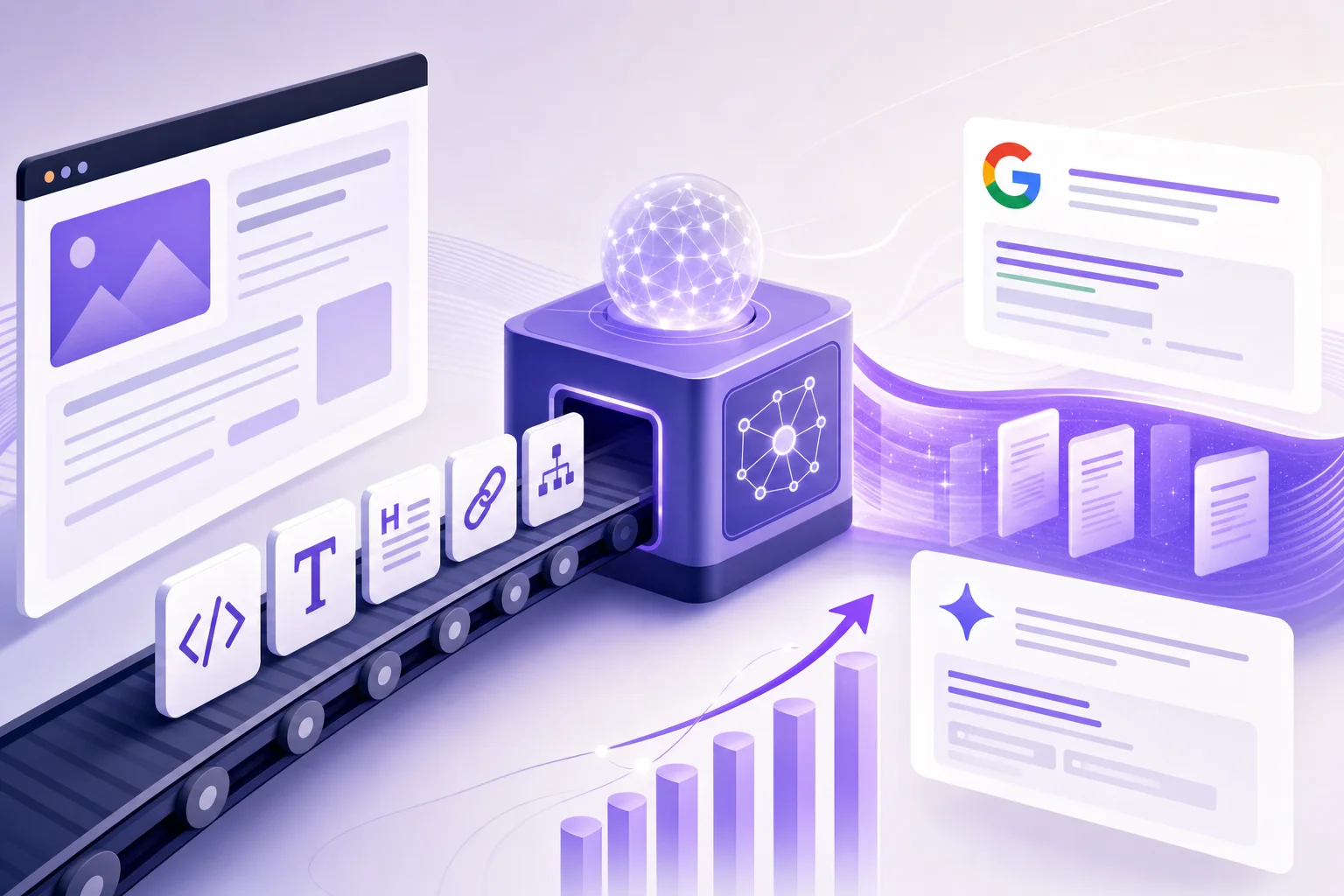
How to Improve Visibility in Google and AI Search
How to improve visibility in google and ai search is the practice of building one content workflow that supports classic rankings and can earn inclusion in AI-generated answers. A product page can rank well. However, it may still miss conversational answers if it lacks clear entities, direct definitions, and trusted proof.
Search behavior now splits across blue links, AI overviews, chat answers, and voice-style questions. Many of these surfaces draw from indexed pages, trusted references, and structured facts. Therefore, disconnected SEO and AI plans waste effort. One shared workflow gives teams cleaner briefs, faster publishing, and better proof of progress.
This article maps the overlap, the AI-specific signals, the content brief, the publishing cadence, and the measurement model. Additionally, you will see how Seonix turns those steps into an automated loop for research, writing, optimization, publishing, and tracking.
How Google and AI search overlap to improve visibility in one workflow
Google rankings and AI answer visibility overlap most at crawlability, relevance, authority, freshness, and clear page structure. Search engines and answer engines both need pages they can access, parse, trust, and match to a user’s intent. The difference is how each surface displays the answer.
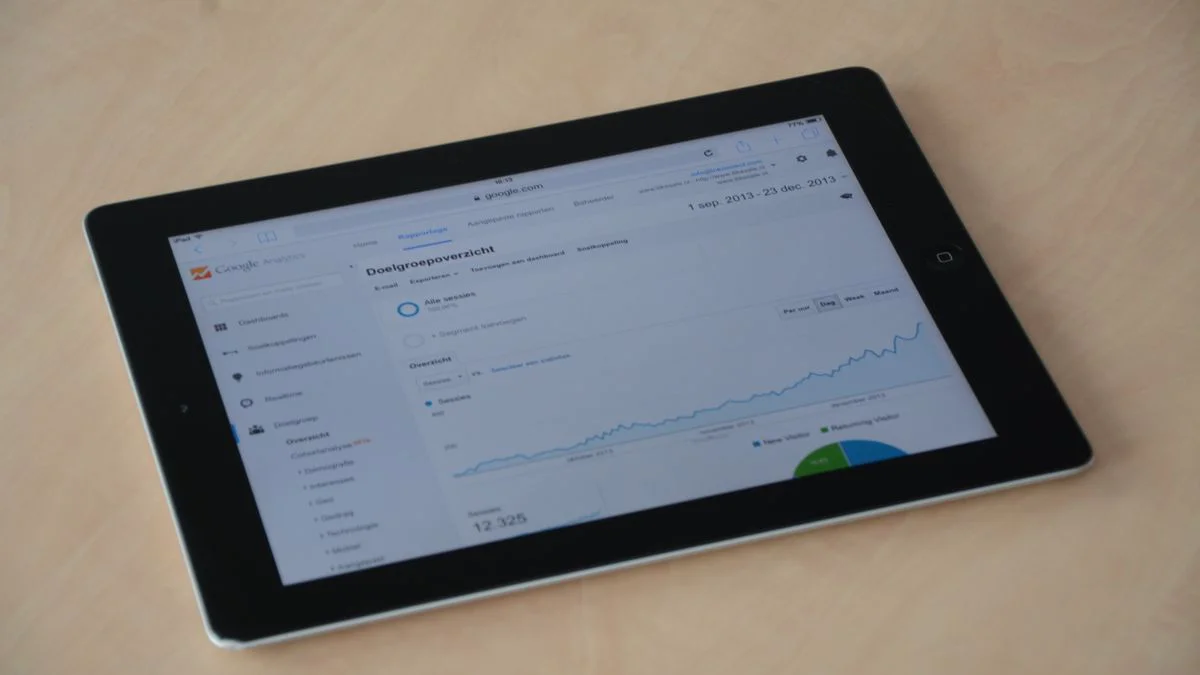
Traditional search often rewards a page with a ranked result. Meanwhile, AI tools may extract a short answer, cite a source, or mention a brand without sending an immediate click. For example, a local software company can rank for “inventory forecasting software” yet lose AI answer inclusion if its page never defines the category in a clean sentence.
Good to know: A page that answers one question in the first 100 words can give both crawlers and AI answer systems a clearer extraction point.
SEO fundamentals that still matter
Core SEO fundamentals still matter because AI systems often depend on search indexes and retrieval signals. Pages need indexable HTML, descriptive title tags, logical headings, internal links, entity clarity, and content that satisfies a real query. If a page cannot rank or get retrieved, AI systems have fewer chances to use it.
Authority can also carry over. Credentials, bylined expertise, dated updates, factual support, and independent mentions help systems judge whether a page deserves to be quoted. In addition, a B2B guide with 12 clear question headings, 3 product screenshots, and recent update notes can give systems more usable evidence than a vague 800-word post.
How AI answers change the payoff
AI answers compress the result. Instead of showing 10 links, the tool may produce one direct answer for a conversational question. Therefore, content must be easy to quote in short passages. Definitions, tables, step lists, and concise examples make extraction easier.
Personalization also changes the result. Location, role, previous prompts, device context, and intent can shape the answer. A page that serves “best workflow for a two-person marketing team” should not read like a generic enterprise brochure. The page needs use cases, constraints, and outcomes that match the query.
Which Google and AI search signals improve visibility more than classic blue links?
AI answers can place extra weight on extractable facts, entity consistency, off-site corroboration, and direct answers to conversational questions. Classic rankings still matter. Yet AI answer engines often need a stronger reason to cite one source over several similar pages. Clear proof beats broad claims.
Generative engine optimization is the work of making content easier for answer engines to retrieve, understand, and cite. For the wider playbook on earning citations, read our guide to getting cited in AI search results. This article stays focused on running one workflow across Google and AI tools.
Signals that make content easier to cite
AI tools are often better able to use pages that contain direct, self-contained answers. A strong paragraph can stand alone when copied into an answer. For example, “Schema markup is code that labels page content for search engines” is more useful than a long intro that waits 300 words before defining schema.
Structured headings also matter. Question-based H2s and H3s help match pages to natural prompts such as “Which SEO fundamentals still matter for AI search visibility?” If 6 of 10 subheadings reflect real user questions, the page gives retrieval systems clearer passage targets.
AI visibility tends to favor pages that answer cleanly, prove their claims, and stay easy to quote without surrounding context.
Real examples of pages cited by AI answers
AI answers commonly cite pages that are specific, authoritative, and easy to verify. Real examples include Google Search Central documentation pages for structured data questions, MDN Web Docs reference pages for JavaScript and browser questions, Mayo Clinic condition pages for health explainers, G2 category pages for software comparisons, and official product documentation pages for workflow or integration questions.
The pattern is more important than the category. These pages usually have clear definitions, stable entities, updated details, and content blocks that can be quoted without heavy interpretation. Similarly, a business page can follow the same model by publishing practical guides, comparison pages, documentation-style articles, and use-case pages that answer one intent directly.
Corroboration outside your own site
Off-site mentions, reviews, partner pages, directory profiles, and industry writeups can support brand understanding. AI systems may use repeated entity patterns across the web. A company name, product category, location, and offer should appear consistently across trusted pages.
Independent corroboration matters most in crowded topics. For instance, 20 near-identical “best CRM process” articles create little separation. A brand with clear customer reviews, consistent descriptions, and cited examples gives AI systems more confidence than a brand that only talks about itself.
Watch out: Blocking key crawlers in robots.txt can remove pages from both search discovery and AI retrieval paths. Review disallow rules after every site migration.
One content brief for Google and AI search visibility
A single content brief should define the search intent, the direct answer, the entities, the proof points, the structure, and the publishing target. As a result, that brief can serve Google and AI tools when it combines keyword data with answer extraction needs.
A practical brief starts with one primary query and 5 to 8 related conversational questions. It then maps each question to a section, a short answer, and a proof point. The proof point can be a product detail, a dated process step, a real workflow, or a measurable benchmark.
The brief fields that matter
Strong briefs reduce rework because writers do not guess what the page must prove. They define the audience, the buying stage, the query type, the entity set, and the desired action. A brief for “SEO automation for SaaS startups” might include entities such as content velocity, indexing, rank tracking, internal linking, and AI citations.
The best briefs also include content extractability rules. Each major section should open with a 40 to 100 word answer. Definitions should fit in one sentence. Lists should group steps or criteria, not restate generic benefits.
Before-and-after example
Before optimization, a page might open with three brand paragraphs and no direct answer. Google can still crawl it, yet the page gives AI systems little to quote. After optimization, the page opens with a definition, adds question headings, includes a comparison table, and links related articles through clear anchors.
Example: A 1,200-word article with 4 broad headings can become a 1,700-word answer-ready page with 7 question headings, 1 comparison table, 5 concise definitions, and 12 internal entity references. The result is not longer for its own sake. Instead, the page covers more retrieval paths.
How to map one workflow to improve visibility in Google search and AI answers
| Workflow area | Google Search impact | AI answer impact | Signals to monitor |
|---|---|---|---|
| Crawl and indexing | Index coverage | Retrieval access | Robots.txt, sitemap, status codes |
| Query research | Keyword relevance | Prompt match | Long-tail queries, question variants |
| Content structure | Featured snippets | Answer extraction | H2 questions, definitions, lists |
| Authority signals | Trust and rankings | Citation confidence | Mentions, reviews, credentials |
| Internal linking | Page discovery | Entity context | Anchor text, topical paths |
| Fresh publishing | Recrawl frequency | Current answers | Update dates, new pages, decay |
| Performance tracking | Rank movement | Mention growth | Positions, citations, share of prompts |
What publishing cadence supports visibility in Google and AI tools?
A consistent publishing cadence can support visibility because many search and AI systems can benefit from fresh, crawlable, topic-rich pages. The right pace depends on site size and review capacity. Still, most growing sites benefit from a weekly rhythm rather than rare content bursts.

Publishing 4 articles in one week and then nothing for 3 months may provide fewer ongoing freshness signals than steady output. A practical cadence pairs new articles with updates to existing pages. For example, a 4-week plan can publish 4 new answer pages and refresh 4 older pages that already have impressions.
A four-week implementation plan
Week 1 should focus on audit work. Check index coverage, robots.txt rules, sitemap status, thin pages, and the top 20 queries already driving impressions. Then pick topics that match existing demand rather than starting from blank ideas.
Week 2 should build briefs and draft the first batch. Each article should answer one primary question, include related prompts, and contain a direct definition near the top. Week 3 should publish, interlink, and request indexing where appropriate. Week 4 should measure impressions, rank movement, AI mentions, and crawl errors.
Technical checks before publishing
Crawler access can make or break the plan. Check that important pages return 200 status codes, canonical tags point to the correct URL, and robots.txt does not block needed paths. Also confirm that server-rendered content appears in the HTML source, not only after heavy scripts load.
Schema markup helps search systems understand content types. Article, Organization, FAQPage, Product, and Breadcrumb markup can clarify entities when used accurately. However, schema does not replace good content. It labels facts; it does not create trust by itself.
Rule of thumb: publish at a pace your team can maintain for 90 days, because consistent output and refreshes beat one short spike of activity.
How Seonix helps improve visibility in Google and AI search tracking
Seonix can track ranking movement and AI mention growth by connecting keyword visibility, content status, prompt checks, and published page performance in one workflow. The goal is not to count every possible answer. The goal is to watch directional gains across high-value queries.

A measurement model should cover 4 layers: indexation, rankings, engagement, and AI answer presence. Indexation shows whether pages can be found. Rankings show traditional search movement. Engagement shows whether traffic reaches useful pages. AI answer presence shows whether tools mention, cite, or summarize the brand.
Metrics that show progress
Useful Google metrics include impressions, average position, indexed page count, click-through rate, and conversions from organic sessions. Useful AI metrics include brand mentions, citation frequency, prompt coverage, cited page URLs, and answer accuracy. A simple dashboard can track 20 priority prompts and review them every 2 weeks.
Prompt tracking should use fixed wording for repeatability. For example, test “What is the best way to automate SEO content publishing for a small SaaS team?” every 14 days. Then record whether the brand appears, whether a page gets cited, and whether the answer describes the offer correctly.
How automation closes the loop
Manual tracking breaks when teams manage dozens of topics. Seonix automates the workflow from site analysis to published and tracked SEO content, so teams can reduce research, writing, optimization, and publishing handoffs. Consequently, the platform keeps the system moving after the first article goes live.
For teams building a measurement model, the detailed guide to AI search visibility metrics explains how to separate mentions, citations, and answer coverage. Teams that also need rank guardrails can use automated SEO visibility tracking to watch movement without chasing daily noise.
How to improve visibility in Google and AI search over the next four weeks
The best next step is a focused 4-week sprint that fixes access issues, briefs answer-ready content, publishes consistently, and tracks both search and AI signals. A sprint works because it creates enough output to learn, but it stays small enough to manage.
- Audit crawl access with robots.txt, sitemap status, canonical tags, and 200 status codes for priority pages.
- Select 10 high-intent queries and expand each into 5 conversational questions customers actually ask.
- Brief each article with a direct answer, entity list, proof points, internal links, and extraction-friendly headings.
- Publish 1 to 2 optimized articles per week and refresh at least 1 older page each week.
- Test 20 fixed prompts every 2 weeks and record mentions, citations, cited URLs, and answer accuracy.
- Improve pages with weak extraction by adding definitions, tables, examples, and clearer section openings.
Common mistakes can block progress even when the content looks polished. Thin intros, vague claims, blocked crawlers, missing internal links, and outdated pages all reduce the chance of retrieval. Another common issue is publishing many near-duplicate articles that target the same intent.
Tip: If two drafts answer the same primary question, merge them before publishing. One stronger page usually gives clearer signals than two weak pages fighting each other.
For ChatGPT-specific visibility tests, use our guide to checking how pages appear in ChatGPT answers rather than expanding this workflow into a separate platform-only plan.
In our experience, the teams that move fastest do not treat AI visibility as a side project. We prefer one content system with clear briefs, scheduled publishing, and steady measurement. That keeps work tied to outcomes rather than one-off experiments. This is the practical lens we use at Seonix.
FAQ
These short answers address common questions about shared SEO and AI visibility work.
Which SEO fundamentals still matter for AI search visibility?
Crawlability, indexation, page speed, intent match, clear headings, internal links, and authority signals still matter. AI answer systems often depend on indexed pages and retrieval signals, so weak technical SEO limits visibility. A page must be accessible and useful before it can earn citations or mentions.
Which AI-specific factors require a different approach?
AI visibility requires more focus on direct answers, entity consistency, extractable passages, off-site corroboration, and conversational query coverage. A page should answer questions in short, self-contained sections. The brand, product, category, and proof points also need consistent wording across the web.
How can content be briefed and published for both Google and AI tools?
Brief content around one search intent, several conversational questions, clear entities, and measurable proof points. Then publish pages with question headings, direct definitions, structured lists, and accurate schema. This format helps Google understand relevance and helps AI tools extract usable answers.
What metrics show progress across both search environments?
Track indexed pages, impressions, average position, organic clicks, conversions, AI mentions, citation frequency, cited URLs, and answer accuracy. Review Google metrics weekly and AI prompt results every 2 weeks. The combined view shows whether content gains discovery, rankings, and answer inclusion.
Can one workflow really serve traditional search and AI answers?
One workflow can serve both if it starts with shared foundations and adds AI-specific extraction signals. The same article can target a keyword, answer conversational prompts, prove authority, and support citations. Otherwise, separate strategies create duplicate work unless a platform needs a narrow test.
Conclusion: how to improve visibility in google and ai search without splitting your strategy
How to improve visibility in google and ai search comes down to one coordinated system: accessible pages, clear answers, strong entities, trusted proof, steady publishing, and shared measurement. Google and AI tools do not behave the same way, but they often rely on many of the same foundations.
The advantage comes from closing the loop. Research should inform briefs, briefs should produce extractable articles, publishing should happen on a steady schedule, and tracking should feed the next content decision. Seonix turns that loop into an SEO autopilot for businesses that want more organic reach without managing every step manually.
If you want to test the workflow on your site, start with the 3-article Seonix trial. You get a practical way to move from visibility gaps to published, optimized content and measurable signals.