

Organic Growth Automation ROI: Calculator, Formula, and Example
Organic growth automation ROI is the financial return from replacing manual SEO research, writing, optimization, publishing, and tracking with a repeatable automated growth workflow. The keyphrase matters because automation only pays when saved hours, lower production costs, and added lead value exceed the platform cost.
A founder publishing 4 articles a month can spend significant time on topic research, briefs, editing, formatting, internal review, CMS upload, and rank checks. In one planning model, 20 to 35 hours at a blended internal rate of $60 per hour equals $1,200 to $2,100 before a single lead arrives.
This guide gives you a practical formula, a static calculator table, and an example scenario you can adapt to your workflow. You will count manual SEO costs, price saved hours, model organic lead value, and decide when automation becomes a better growth system than hand-built content operations.
Calculator Inputs for Organic Growth Automation ROI Returns
| ROI Input | Manual Workflow Cost | Automation Impact | How to Calculate |
|---|---|---|---|
| SEO research hours | 5-10 hours/month | Lower planning time | Hours x hourly rate |
| Content writing | 2-6 hours/article | AI-assisted drafts | Articles x time x rate |
| Editing and SEO checks | 1-3 hours/article | Structured optimization | Articles x review time |
| CMS publishing | 20-60 minutes/article | Automated delivery | Articles x upload time |
| Indexing and sitemap work | 15-45 minutes/article | Reduced manual checks | Posts x technical time |
| Traffic upside | Current baseline | More pages ranked | Sessions x conversion rate |
| Lead value | Sales team estimate | Higher lead volume | Leads x value per lead |
| Platform cost | Monthly subscription | Fixed automation input | Monthly fee x months |
The ROI inputs should capture both hard cost savings and revenue potential. Therefore, a useful model starts with monthly hours, article volume, conversion rate, lead value, and automation cost because those numbers move the result fastest.

Rule of thumb: if automation saves 20 hours a month at $60 per hour, it creates $1,200 in time value before traffic, leads, or content velocity are counted.
Formula for Organic Growth Automation ROI
The simplest ROI formula is: organic growth automation ROI = (monthly savings + monthly lead value - monthly automation cost) / monthly automation cost x 100. It works because it separates efficiency gains from growth gains. Then it compares both against the recurring cost.
Use monthly numbers first. A 90-day view can look more stable. However, monthly inputs make problems easier to spot. For instance, a model with 24 saved hours, $65 per hour, $900 in lead value, and $700 in automation cost gives (($1,560 + $900 - $700) / $700) x 100 = 251% ROI.
What Costs Should You Include in Organic Growth Automation ROI?
Organic growth automation ROI should include every manual task required to turn a customer question into a published, tracked article. Count research, topic planning, content writing, editing, on-page SEO, image selection, CMS formatting, internal linking, indexing checks, reporting, and revision time.
Many teams undercount SEO because they only price writing. Yet a single article can touch 6 to 9 workflow steps before it can rank. If a marketer spends 45 minutes choosing a keyword, 30 minutes building a brief, 2 hours writing, and 45 minutes publishing, the article already carries 4 hours of internal cost.
Manual Tasks That Automation Can Replace or Reduce
SEO workflow automation does not remove strategy. Instead, it cuts repetitive steps that drain time from founders, marketers, and agency teams. End-to-end organic growth automation can handle keyword and topic planning, AI-powered content generation, automated publishing to CMS platforms, indexing and sitemap automation, visibility tracking, and AI search visibility monitoring.
Seonix is designed around that continuous workflow, from URL analysis to published and tracked SEO content. Additionally, if you want to see the workflow parts in order, the product walkthrough explains how automated SEO content moves from research to publishing.
Watch out: do not count only contractor invoices. Internal review, CMS upload, reporting, and rework can add substantial labor to each article.
Hidden Costs That Distort the ROI Model
Hidden SEO costs usually sit inside calendars, not invoices. A founder who reviews every draft for 30 minutes across 12 articles spends 6 hours a month. At $100 per hour, that review layer costs $600 even when the writing budget looks low.
Also count missed output. If a team plans 8 posts and ships 3, the unused 5 topics still consumed planning time. As a result, automation ROI improves when publishing becomes steady because content lifecycle automation turns finished research into shipped pages instead of parked ideas.
How Do You Estimate Time Saved From SEO Workflow Automation for Organic Growth ROI?
Estimate time saved by listing each SEO task, recording current monthly hours, and marking the share automation can remove. Then convert saved time into money. Multiply saved hours by the fully loaded hourly value of the people doing the work.
Use realistic percentages. Automation may cut CMS publishing substantially, but it may cut final review much less. In contrast, the model should still respect the work that needs human judgment, especially brand review, offer accuracy, and conversion messaging.
Time-Saving Benchmarks by Workflow Stage
A practical benchmark starts with task-level ranges. For a small site, topic research may take several hours per month. Content briefing can add 30 to 90 minutes per article. Meanwhile, publishing and formatting can add 20 to 60 minutes per article, especially when the CMS requires manual metadata, categories, and internal links.
Automated publishing to CMS systems matters because upload work scales linearly. Ten articles can mean several hours of formatting and checks. Direct integrations, including CMS and custom delivery options, reduce that drag; Seonix lists available publishing paths on its website integration options.
Automation ROI gets stronger when it removes handoffs, not just writing time. The best savings come from fewer repeated decisions across the whole content cycle.
Converting Saved Hours Into Financial Value
Time savings become financial value when you price the person whose calendar gets freed. A founder hour may be worth $100 or more if it shifts from editing articles to sales calls. Similarly, a marketing coordinator hour may be worth $35 to $60 on a blended internal-cost basis.
Use one blended rate if the team is small. For example, 10 founder hours at $100 plus 14 marketer hours at $50 equals $1,700 in monthly time value. That calculation gives a cleaner ROI estimate than treating all hours as equal.
How Should You Model Organic Lead Value From Automated Content Publishing?
Model organic lead value with conservative traffic, conversion, and lead-value assumptions. Start from current organic sessions, estimate additional qualified visits from new content, apply a modest conversion rate, and multiply expected leads by the average value of a qualified lead.
A responsible model avoids assuming every new article ranks. For early pages, you might model 10 to 50 visits per month after ramp-up. For stronger sites, a useful article can bring hundreds of visits, but the calculator should use the low case first.
Traffic, Conversion, and Lead Value Inputs
Lead value depends on your business model. A B2B service may treat a qualified lead as worth $150 to $500 if close rates and deal sizes support that range. Likewise, a SaaS team may model value from trial-to-paid rates, average monthly revenue, and expected customer life.
For a SaaS example, assume 20 new articles, 30 visits per article after ramp-up, a 2% visitor-to-lead rate, and $120 value per qualified lead. The model gives 600 visits, 12 leads, and $1,440 in monthly lead value. Teams that need SaaS-specific organic planning can compare that logic with SEO automation for SaaS growth.
AI Search Visibility and Assisted Discovery
Organic traffic no longer comes only from blue links. AI answers in tools such as ChatGPT and Gemini can influence how buyers compare options, define problems, and shortlist vendors. Therefore, AI search visibility monitoring should sit beside rank tracking, not replace it.
For ROI, treat AI visibility as an assisted discovery signal until your analytics can tie it to conversions. Track branded search lifts, direct traffic changes, demo form notes, and sales-call mentions over 60 to 120 days. This keeps the model grounded while still valuing visibility beyond classic search results.
Manual Content Production Versus Organic Growth Automation ROI Costs
Manual content production can fit small one-off needs. However, automated growth cost often wins when a team publishes every month. Compare the total monthly cost of planning, writing, editing, publishing, tracking, and reporting against the fixed and variable costs of automation.
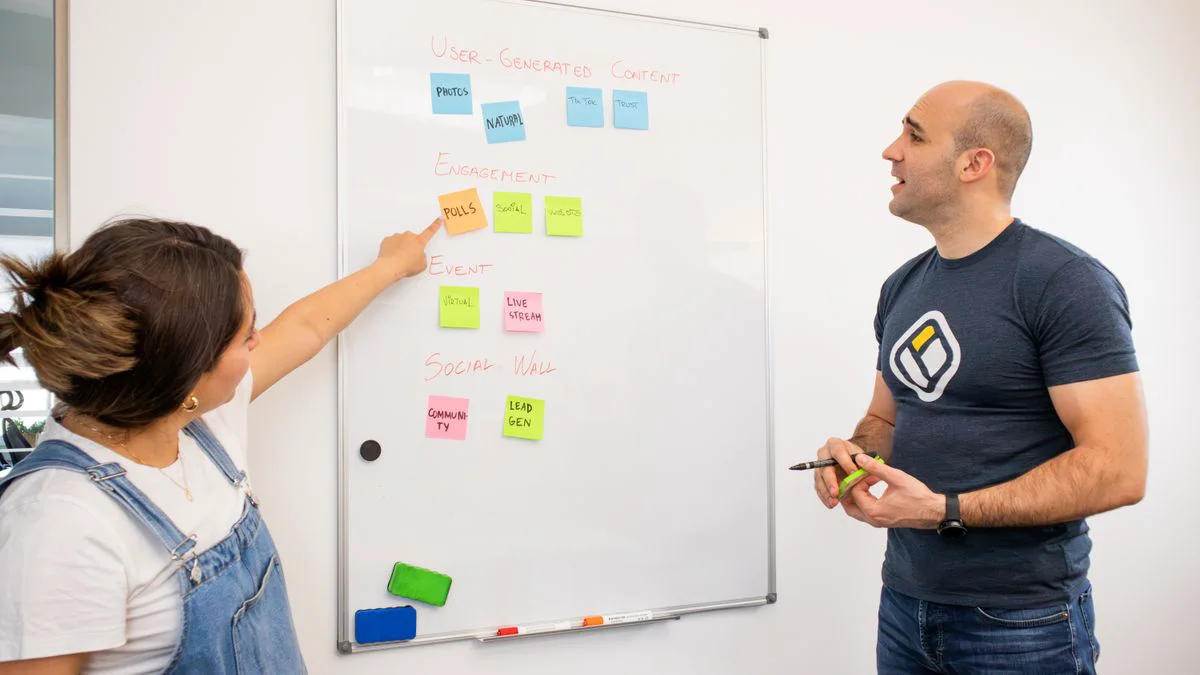
A general freelance service may be cheaper for one isolated article. On the other hand, a specialist agency may be better when you need a complex brand strategy, deep stakeholder workshops, or a full content repositioning project. Automation fits best when the core need is steady, optimized content for real search demand.
Side-by-Side Workflow Comparison
A manual workflow often moves from keyword research to brief, draft, edit, SEO review, CMS upload, indexing check, rank tracking, and reporting. Each handoff adds delay. With 4 people involved, even a simple article can take 5 to 10 business days from idea to publication.
An automated workflow compresses that chain. Seonix is intended to analyze visibility, identify customer queries, create optimized articles, publish them to the site, and track performance over time. For broader platform context, see the automated organic growth platform model.
- Founder-led site: saves review and publishing time while increasing article output.
- Small marketing team: reduces repetitive topic research, briefs, and rank checks.
- Agency workflow: standardizes delivery across multiple client sites without adding one editor per account.
- Multi-location business: publishes local and service-specific content with fewer CMS handoffs.
Good to know: agency teams should calculate ROI per client and across the whole account base. Saving 3 hours per client across 15 clients creates 45 reusable hours each month.
Worked Example: From Manual Workflow to Organic Growth Automation ROI
Here is a realistic static calculator example for a team publishing 12 articles per month. Manual research takes 8 hours, writing and editing take 48 hours, publishing takes 8 hours, and reporting takes 4 hours. Total manual time is 68 hours.
At a blended rate of $55 per hour, the manual workflow costs $3,740 in labor. Assume automation cuts 70% of those hours, saving 47.6 hours, worth $2,618. In addition, 10 leads from organic content at $120 per lead add $1,200 in lead value.
Example: $2,618 saved labor + $1,200 lead value - $900 approximate automation cost = $2,918 net monthly gain, and $2,918 / $900 x 100 = 324% approximate ROI.
The $900 figure is an illustrative platform-cost input, not Seonix pricing. For current plan numbers, use the live monthly automation pricing as the cost line in your model.
Transparent Benchmark Outcome Example
A transparent benchmark outcome should separate process savings from search growth. For example, if a team starts with 68 monthly manual hours and automation reduces that to 22 hours, the confirmed process outcome is 46 hours saved. At $55 per hour, that is $2,530 in monthly labor value before assigning any traffic impact.
The traffic outcome should be reported separately and updated only when data arrives. If the same team publishes 12 articles and, after 90 to 180 days, the batch averages 25 visits per article per month with a 2% lead conversion rate, the benchmark is 300 monthly visits and 6 leads. At $120 per qualified lead, that adds $720 in modeled monthly lead value. If the visits or conversion rate come in lower, replace the benchmark with the actual outcome rather than keeping the original forecast.
When Does Organic Growth Automation ROI Beat a Manual Workflow?
Automation becomes more cost-effective when the value of saved hours and expected lead gains exceeds the monthly platform cost for several months. The break-even point often appears once a team publishes consistently, repeats the same SEO tasks, and needs reliable reporting.
A simple break-even formula is: monthly automation cost / hourly value = hours that must be saved. If software costs $900 in an illustrative model and the team values time at $60 per hour, the workflow must save 15 hours before lead value is counted.
Break-Even Signals to Watch
Strong break-even signals include delayed publishing queues, repeated keyword research, slow CMS upload work, and content plans that outgrow team capacity. Moreover, if content production depends on one overloaded person, automation can reduce operational risk.
Weak break-even signals include a site that only needs 1 article per quarter or a company still testing whether organic search fits its market. In those cases, a narrow manual project may beat a recurring automation workflow until the channel proves demand.
Implementation Timeline From Signup to Measured Results
A practical timeline has 4 phases. Setup and site analysis can happen in the first few days. Topic selection, content generation, and publishing can follow as soon as access and review rules are ready.
Measurement takes longer because organic results compound. Use 30 days to validate process savings, 60 days to review indexing and early visibility, and 90 to 180 days to judge traffic and lead trends. This split prevents teams from judging search impact before pages have enough time to compete.
How Should You Calculate ROI for Organic Growth Automation Step by Step?
Calculate organic growth automation ROI by moving from known costs to cautious growth assumptions. This order keeps the estimate grounded because saved hours are easier to verify than future traffic.

The process below uses one ordered workflow so the result stays clean. Complete the steps monthly. Then repeat the same model after 30, 60, and 90 days with actual data.
- List every recurring SEO task and estimate monthly hours for each task.
- Multiply each task by the hourly value of the person doing the work.
- Record current article output, publishing delays, and monthly content costs.
- Estimate automation savings by task using conservative reduction percentages.
- Model new organic visits, conversion rate, and value per qualified lead.
- Subtract automation cost from saved labor plus lead value.
- Compare ROI against the manual workflow after each monthly reporting cycle.
Keep the model simple enough to update. A 12-line spreadsheet usually beats a complex attribution model that no one maintains. Ultimately, the best ROI calculator is the one your team can review every month without a finance meeting.
How to Use Organic Growth Automation ROI Results When Deciding on Seonix
Use organic growth automation ROI results to decide whether Seonix should replace manual SEO work, support an internal team, or scale an agency delivery process. The result should guide budget, publishing volume, review workload, and expectations for traffic growth.
If the ROI model shows clear savings before lead value, automation is a low-risk operational upgrade. If the model depends entirely on aggressive traffic growth, lower the assumptions and test the workflow first. A healthy model should still make sense when traffic lands at 50% of the optimistic case.
Use Cases That Fit the Calculator
Founder-led companies can use the calculator to price back reclaimed time. A founder who saves 15 hours a month may gain room for sales, hiring, or product work. More importantly, the model helps decide whether that time shift is worth more than the platform cost.
Agencies can run the same calculator across client accounts. If 10 clients each save 4 hours of research, formatting, and reporting, the agency frees 40 hours monthly. CRM and marketing platform integrations can also connect organic content to lead generation and nurturing workflows. Consequently, the ROI case becomes clearer for client reporting.
Risk Controls for AI-Assisted Publishing
AI-powered content generation needs clear controls. Keep human review for claims, offers, legal terms, pricing, and brand fit. Set rules for internal links, topic fit, and pages that should not be created automatically.
Ethical automation controls also protect the ROI model. Low-quality output can create rework, and rework destroys savings. Track revision time per article, index status, traffic, leads, and AI search mentions. Over time, data-driven performance optimization can improve each publishing cycle.
The best decision is not whether automation can write more content. Instead, ask whether the whole workflow can publish useful pages without forcing the team back into repetitive checks. That is the standard we use when thinking about SEO automation at Seonix.
FAQ
These answers cover the practical questions teams ask before they model automation costs.
Which manual SEO and content costs should be counted?
Count every recurring task that moves content from idea to measurable performance. Include keyword research, topic planning, briefs, writing, editing, on-page SEO, CMS upload, internal linking, indexing checks, sitemap updates, rank tracking, reporting, and stakeholder review. If a person spends time on the workflow each month, the ROI model should include that cost.
How can time savings be converted into financial value?
Convert time savings by multiplying saved hours by the hourly value of the person whose work is reduced. Use a blended rate if several people share tasks. For example, 20 saved hours at $60 per hour equals $1,200 in monthly time value before organic traffic or leads are included.
How should organic traffic and lead assumptions be modeled responsibly?
Model organic traffic with conservative page-level assumptions, then apply a realistic conversion rate and lead value. Start with low-case traffic, such as 10 to 50 visits per new article after ramp-up, unless your site already proves stronger results. Then test actual sessions, leads, and visibility every 30 days.
When does automation become more cost-effective than a manual workflow?
Automation becomes more cost-effective when monthly saved labor plus expected lead value exceeds the recurring automation cost. The break-even point appears faster when a team publishes often, repeats the same SEO steps, manages many pages, or handles several client sites. Low-volume one-off projects may stay cheaper manually.
Does automated publishing remove the need for human review?
Automated publishing should reduce repetitive work, not remove judgment. Keep human review for offer accuracy, compliance-sensitive claims, brand fit, and high-value commercial pages. The strongest ROI comes when automation handles the repeatable workflow while people focus on decisions that affect trust, conversion, and sales quality.
Conclusion: Build an Organic Growth Automation ROI Model Before You Buy
An organic growth automation ROI model gives you a clearer buying decision than a feature checklist. Price your manual workflow, convert saved hours into money, model lead value with conservative assumptions, and compare the total against automation cost. The answer shows whether you need a one-off manual project, a stronger internal process, or a system that keeps publishing and tracking without constant handoffs.
A useful model also improves after launch. Replace assumptions with actual hours saved, articles published, pages indexed, organic visits, AI visibility signals, and qualified leads. After 90 days, the calculator becomes a performance scorecard, not just a buying tool.
If you want to test the assumptions with your own site, start with a free SEO analysis. Seonix can show where automation may save work, expand content output, and improve visibility before you commit to a larger workflow.