
How to Appear in AI Search Results: A Platform-by-Platform Visibility Matrix
Learning how to appear in ai search results means making your business content easy for AI answer engines to find, trust, extract, and cite when users ask specific questions.
AI search now turns research into direct answers. Therefore, one cited paragraph can shape a buyer’s view before they click a blue link. A founder comparing payroll tools, for example, may see an AI answer quote a pricing page, a review page, and a help article quickly.
This playbook shows how AI search visibility works, which signals matter, and how to build a repeatable workflow. You will learn how to improve content structure, technical access, authority signals, and citation tracking. As a result, SEO does not have to become a manual full-time job.
Plain-Language Summary
AI search needs clear answers, trusted proof, and open access. First, make each page easy to crawl. Then answer real customer questions in short sections. Also show proof through reviews, credentials, and outside mentions.
A good page does not try to impress the model. It helps the model answer a user. For example, a short answer block, a simple table, and a dated update note can make one page easier to cite.
Measurement matters too. Track the same prompts on a set schedule. Moreover, record brand mentions, cited URLs, and answer accuracy. This turns AI visibility into a repeatable growth process.
How to Appear in AI Search Results: What It Means
Appearing in AI search results means an AI system mentions, summarizes, or cites your brand, page, product, or data inside a generated answer. The citation may appear as a visible source link, a brand mention, or a summarized fact pulled from your page.
AI search visibility matters for organic growth because it reaches users at the answer stage, not only the search results page. A buyer asking “best CRM for a 12-person agency” wants a short answer, comparison points, and proof. If your page supplies those pieces, AI systems can use it more easily.
Concrete examples appear when AI answers cite a pricing page for “how much does automated SEO content cost.” They may also cite a comparison page for “Seonix vs manual SEO agency,” a documentation page for “how to publish SEO articles through a REST API,” or a review page for “best SEO automation tools for small teams.” These page types work because they answer a specific prompt with facts, criteria, and sourceable details. However, the page that ranks first in classic search does not always get cited if another page gives a cleaner, more direct answer.
Good to know: A 60-word answer block near the top of a page is often easier to extract than a 900-word introduction. Put the clearest answer before background, history, or brand claims.
How to Make Pages Appear in AI Search Results Differently Than Google Rankings
AI search results differ from traditional rankings because they create one answer from many retrieved sources. Traditional search lists pages for a user to review. Meanwhile, AI search selects passages, blends context, and may cite only a small number of sources.
Classic SEO still matters because many AI systems rely on search indexes, crawl signals, and retrieval quality. However, AI answer engines also reward extractable facts, clear entity links, and direct responses to user questions. A page can rank well but still fail as a source if the answer hides under vague copy.
Consider a local service page that says “we provide trusted support for growing companies.” That line offers little extractable value. A stronger passage says, “Our onboarding package includes keyword research, 4 SEO articles per month, CMS publishing, and monthly performance tracking.” The second version gives AI systems facts they can summarize.
AI answers do not cite pages because they sound impressive. They cite pages because the answer is clear, supported, current, and easy to isolate.
Personalization adds another difference. AI systems may adjust results by location, user intent, prior context, or device. Therefore, a page should answer narrow variants, such as “for SaaS startups,” “for Shopify stores,” or “for agencies managing 20 client sites.”
How to Use Platform Tactics So Pages Appear in AI Search Results
Different AI answer engines retrieve, summarize, and cite sources in different ways. The core strategy stays the same: publish clear, accessible, well-supported pages. The platform-specific priority is simple. First, learn which source types each system tends to surface. Then run access checks that reduce discovery problems.
Compare AI answer engine signals
The matrix below turns those differences into practical checks. Additionally, use it to decide where a page needs clearer facts, stronger indexing, or better proof before the next test cycle.
Platform source patterns
Use the first columns to compare where each answer engine finds source material. Likewise, note which page types already exist on your site and which ones need work.
How each platform finds and cites sources
The table below keeps the comparison practical. It shows common source types, citation behavior, access checks, and the best next action for each platform.
Source patterns to review
Start with the source column. It shows which pages, profiles, and proof points each answer engine may use. For example, one tool may favor documentation, while another may lean on Google-indexed pages or review content.
Actions to take after the matrix
Next, review the access and priority columns together. This helps your team decide whether to fix crawl access, improve page structure, add proof, or publish a missing answer page.
Matrix fields to compare
Use the table as a quick work plan. In addition, check one platform at a time so the next action stays clear.
| AI Answer Engine | Common Source Types | Citation Behavior | Technical Access Checks | Optimization Priority |
|---|---|---|---|---|
| ChatGPT | Public web pages, product pages, documentation, support content, reviews, and pages available through search or browsing features | May mention brands without a visible citation, or cite selected source links when browsing or search-backed answers are used | Check indexability, robots.txt rules, clean HTML, canonical tags, and whether important content is visible without heavy script dependence | Create concise answer blocks, strong entity descriptions, product facts, comparison sections, and consistent off-site corroboration |
| Gemini | Google-indexed pages, business profiles, authoritative articles, YouTube or media surfaces, product pages, and documentation | Often blends answer text with links or source cards depending on the experience and query type | Check Google indexing, sitemap coverage, structured data, page experience, canonical tags, and crawlable internal links | Align pages with conversational Google-style queries, add schema, keep business details consistent, and support claims with clear source passages |
| Perplexity | Search-indexed articles, documentation, comparison pages, forums, news sources, reviews, and data-rich pages | Frequently shows visible citations, making page-level source quality and extractable passages especially important | Check that priority URLs are indexable, return 200 status codes, load quickly, and expose the answer in the rendered HTML | Publish direct answers, comparison tables, dated updates, original examples, and sourceable facts that can stand alone as cited passages |
| Google AI answers | Google-indexed pages, authoritative publishers, product and service pages, local results, reviews, documentation, and structured content | May cite a small set of links, show supporting source cards, or summarize information without sending the same click pattern as classic rankings | Check Search Console coverage, robots.txt, noindex tags, structured data validity, internal linking, mobile rendering, and canonical selection | Strengthen classic SEO foundations, answer long-tail questions clearly, add entity signals, improve E-E-A-T style proof, and refresh high-intent pages |
Access checks by platform
After you review the matrix, test the pages that support your highest-value prompts first. As a result, the team can fix crawl blocks, weak source passages, and missing proof before scaling new content.
What signals make a page more likely to be cited by AI answers?
A page becomes more citable when content quality, authority signals, and technical access work together. AI answer inclusion depends on whether the system can retrieve the page, understand the entity, verify the claim, and quote a useful passage.
How to Use Content Signals So Pages Appear in AI Search Results
Strong content signals include direct definitions, question-based headings, short answer paragraphs, examples, and consistent terms. Topic relevance also matters. A page about AI search should cover crawl access, structured data, citations, authority, measurement, and content freshness. It should not repeat one keyword and ignore the wider topic.
A useful structure pairs each claim with proof or a concrete example. For instance, a page explaining schema markup should show which schema type fits an article, product, service, or FAQ page. A 4-row example can make the content easier to parse than three abstract paragraphs.
Authority signals that reduce citation risk
Authority signals include author expertise, clear business details, named products, customer reviews, independent mentions, and factual consistency across the web. AI systems may be less likely to cite weak claims when better-supported pages answer the same question.
A SaaS company with 20 detailed customer reviews, active product documentation, and consistent founder profiles sends stronger trust signals than a thin site with anonymous posts. Even without a large brand, a business can improve trust by publishing expert notes, original examples, and dated update logs.
Technical signals that keep content reachable
Technical signals include indexability, crawl permissions, page speed, canonical tags, structured data, and clean HTML. If crawlers cannot reach the page, the answer engine may never evaluate the content. Heavy script rendering can also make extraction harder.
Watch out: A blocked robots.txt rule can remove an entire content folder from AI retrieval. One line that disallows “/blog/” can erase dozens of useful pages from discovery.
How to Structure Content So Answers Appear in AI Search Results
Content should answer the user’s question first, then support the answer with proof, examples, and next steps. This format helps AI systems quote the page because each section can stand alone without surrounding context.
Use question headings that match real buyer language. For example, “How long does SEO content take to rank?” works better than “Timeline considerations.” The first heading maps to a conversational query. In contrast, the second forces the model to infer intent.
Answer blocks should stay short. A strong section often opens with 40 to 100 words, then adds detail below. This pattern supports both featured snippets and AI citations because the system can lift the answer without rewriting the whole section.
An extractable answer template
A citable section often follows a simple pattern. Start with a direct answer in one or two sentences. Then add 3 to 5 proof points, one example, and a clear next action.
- Write a 40 to 80 word answer under each question heading.
- Define key terms in one complete sentence before using them heavily.
- Add one concrete example for each major idea.
- Use lists for steps, criteria, and checks.
- Update pages when product details, processes, or market facts change.
Rule of thumb: If a paragraph cannot be quoted without the paragraph above it, rewrite it with the subject named in the first sentence.
A before-and-after example shows the difference. Before: “Our platform improves visibility with smart automation.” After: “Seonix identifies customer search queries, creates optimized articles, publishes them to your site, and tracks performance after publication.” The second version gives AI systems four clear facts.
How to Check Technical Access So Pages Appear in AI Search Results
Technical checks help AI search systems access, parse, and index your content before any citation can happen. The most important checks cover robots.txt, noindex tags, canonical tags, server status codes, structured data, internal links, and rendered HTML.
Start with crawl permissions. Review robots.txt for blocked folders, confirm key pages return a 200 status code, and check that important articles do not carry noindex tags. A simple crawler audit can find these issues quickly on many small sites.
AI-specific crawlers also need attention. You can test whether common AI crawlers can reach your site with an AI crawler access check before you spend more time rewriting content. This step prevents a common waste of effort.
Structured data helps machines understand page type, author, organization, product, and FAQ context. JSON-LD does not force citation, but it reduces ambiguity. For faster setup, a schema markup workflow can create cleaner entity signals without hand-coding every page.
An llms.txt file may also help document important resources, policies, documentation, and high-value pages for AI tools that choose to use it. Use a clear file with stable URLs, then keep it aligned with your content plan. A valid llms.txt file is a practical addition for teams building AI search visibility.
How to Use Off-Site Mentions So Brands Appear in AI Search Results
Off-site mentions improve AI visibility because answer engines compare your claims with outside signals. Reviews, directories, interviews, podcasts, partner pages, and industry articles can all support entity confidence. They work best when they describe the same business in consistent terms.
Independent corroboration matters most for claims that users would question. If your page says “best for agencies,” outside reviews and comparison mentions help support that position. If your page says “integrates with Shopify,” your documentation and public integration page should say the same thing.
Reviews add useful language because customers describe real problems. A review that mentions “publishes articles directly to WordPress” may support visibility for a query about automated publishing. Conversely, a vague five-star review adds less value because it carries no extractable product detail.
Expert sources also raise trust. Add author bios with relevant experience, include dated updates, and explain how claims were tested or observed. For example, a technical article on crawl access should include the exact checks performed. That may include robots.txt review, status code testing, and rendered HTML inspection.
How to Measure Whether Pages Appear in AI Search Results
AI visibility measurement tracks citations, brand mentions, answer inclusion, sentiment, and cited URLs across repeated prompts. Keyword rankings still matter. However, they do not show whether an AI answer names your brand or uses your page as a source.

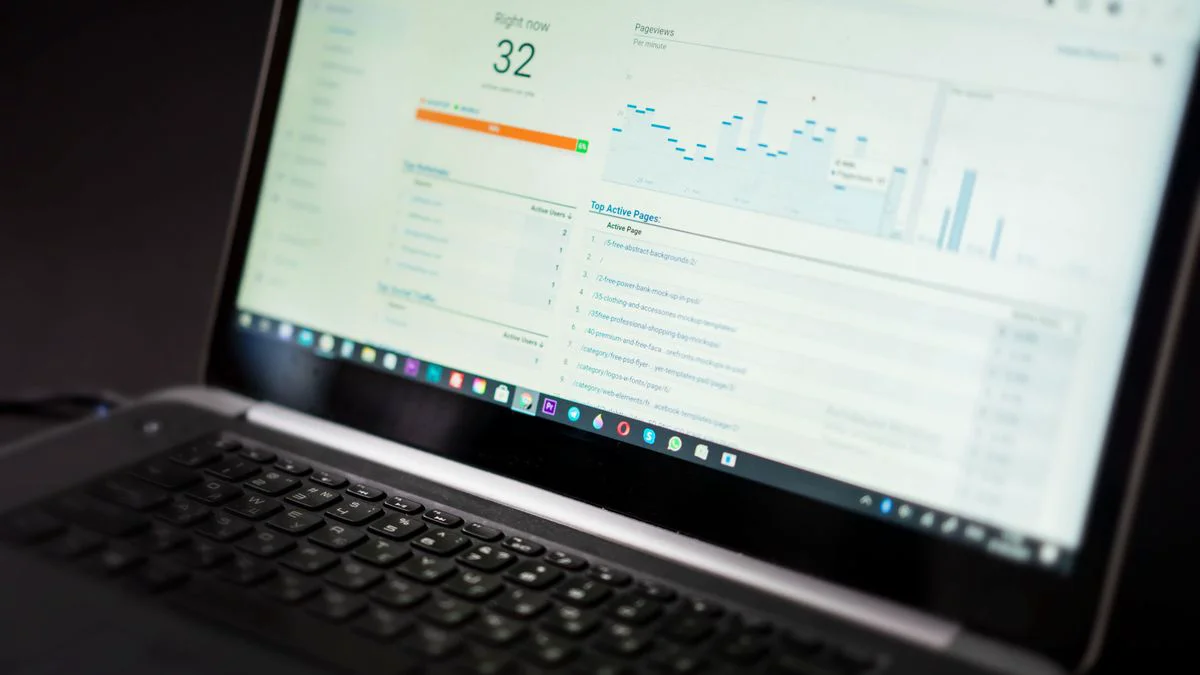
A practical dashboard should track 5 core metrics: prompt set, answer presence, cited URL, brand mention, and answer sentiment. Add search ranking, organic clicks, and conversions beside those metrics. This helps the team connect AI visibility to business outcomes.
AI citation measurement dashboard template
A full AI citation dashboard should separate prompt testing, source visibility, business impact, and follow-up actions. This makes it easier to see why visibility is improving. Pages may earn citations, the brand may gain unlinked mentions, or downstream organic traffic and conversions may increase.
| Dashboard Field | What to Record | Update Frequency | Decision It Supports |
|---|---|---|---|
| Prompt cluster | Buyer intent, comparison intent, problem intent, local intent, or support intent | Every test cycle | Shows which customer questions have enough visibility and which need content |
| Exact prompt | The full conversational query used in each AI tool | Every test cycle | Keeps testing consistent so changes are easier to compare |
| AI platform | ChatGPT, Gemini, Perplexity, Google AI answers, or another tracked answer engine | Every test cycle | Identifies platform-specific gaps and citation patterns |
| Answer presence | Present, partially present, absent, or competitor cited instead | Every 2 weeks | Shows whether the brand is entering generated answers |
| Cited URL | The exact page cited, or “no citation” when the brand is only mentioned | Every 2 weeks | Identifies which page types earn citations and which pages need restructuring |
| Brand mention | Whether the answer names the brand, product, founder, or category association | Every 2 weeks | Captures visibility that standard ranking reports miss |
| Sentiment and accuracy | Positive, neutral, negative, outdated, or inaccurate answer details | Every 2 weeks | Flags pages that need clearer facts, corrections, or stronger proof |
| Competing sources | Competitor pages, directories, forums, documentation, or review sites cited instead | Every 2 weeks | Shows what authority or content format the answer engine prefers |
| Supporting SEO metrics | Keyword position, impressions, clicks, conversions, and assisted leads for the cited page | Monthly | Connects AI visibility to organic growth and revenue outcomes |
| Next action | Update page, add answer block, improve schema, build proof, request reviews, or publish missing content | Every review | Turns measurement into a repeatable optimization workflow |
Use a fixed prompt set to avoid noisy results. For example, a payroll company might test 30 prompts across buyer intent, comparison intent, troubleshooting intent, and local intent. Run the same prompts every 2 weeks, then record which pages appear. Also note which competitors or generic sources displace them.
Tip: Track both citation and mention. Some AI answers mention a brand without linking, and that still affects consideration during early research.
A citation tracking workflow
- Group 20 to 50 customer questions by intent and buying stage.
- Run each prompt in the same AI tools on a fixed 2-week schedule.
- Record cited URLs, brand mentions, answer position, and sentiment.
- Map missing prompts to content gaps or weak authority signals.
- Publish or update pages that answer the missing questions directly.
- Review changes after 4 weeks and keep the winning format.
An automation platform can reduce the manual load here. Seonix connects research, content creation, publishing, and tracking into one workflow. This fits teams that want AI-ready SEO content without managing each step by hand. The publishing and tracking workflow shows how that process runs from URL analysis to performance review.
AI Search Visibility Checklist
How to appear in ai search results? Use this checklist after the audit and before scaling production. Moreover, it keeps content, authority, and access work aligned instead of treating AI visibility as a one-time copy edit.
- Confirm priority pages are indexable and crawlable.
- Add direct answer blocks under question-based headings.
- Support claims with credentials, reviews, and independent mentions.
- Use structured data where it clarifies page type or entity details.
- Publish fresh content on a consistent schedule.
- Track prompts, citations, brand mentions, and cited URLs every 2 weeks.
How to Use a Four-Week Plan So Pages Appear in AI Search Results
A four-week plan works because AI visibility needs research, page fixes, content production, and measurement in sequence. Teams often fail when they publish new pages before fixing crawl access. They also struggle when they skip the prompts they want to win.
Week 1: Audit access and current visibility
The first week should focus on retrieval. Check robots.txt, noindex tags, canonical tags, sitemap coverage, page speed, and rendered content. Then run 20 to 30 customer prompts and record whether the brand appears, gets cited, or stays absent.
Week 2: Improve answer-ready pages
Next, focus on high-intent pages. Rewrite introductions into direct answer blocks, add question headings, define key terms, and include examples. Update 5 to 10 priority pages before creating net-new content.
Week 3: Publish missing content
The third week should cover gaps. If users ask comparison, cost, use-case, or integration questions, create pages that answer those queries directly. A steady content schedule matters because AI systems need enough topical depth to understand where your brand fits.
Week 4: Measure, refine, and scale
Finally, compare prompts against the baseline. Track citation changes, brand mentions, cited URLs, and search traffic. If a page earns mentions but no citations, add clearer facts, stronger structure, and better off-site proof.
An illustrative before-and-after case shows the workflow. A B2B site starts with 30 tracked prompts, 2 brand mentions, and 0 cited URLs. After access fixes, 8 rewritten pages, and 6 new answer-led articles, the next review records 9 brand mentions and 3 cited URLs. The exact result will vary. Nevertheless, the measurement pattern stays useful.
What common mistakes keep brands invisible in AI answers?
Brands stay invisible in AI answers when their content cannot be found, trusted, or quoted. The most common mistakes include blocked crawlers, vague copy, thin topic coverage, inconsistent brand facts, weak off-site proof, and no measurement process.
One common issue is writing for brand mood instead of answer extraction. Phrases like “growth partner for ambitious teams” may work in a hero section, but they do not answer buyer questions. AI systems need concrete nouns, clear claims, and useful context.
Another mistake is publishing once and stopping. Freshness matters for fast-moving topics because outdated pages may lose trust. Review important pages every 30 to 90 days, especially pages that mention tools, integrations, regulations, or pricing models.
Thin authority also blocks progress. A business may publish strong articles, yet remain uncited because no outside pages confirm its expertise. Build proof through reviews, partner pages, directories, expert contributions, and consistent profiles.
- Do not hide answers below long introductions.
- Avoid blocking AI crawlers without a clear policy reason.
- Keep product descriptions consistent across the web.
- Remove unsupported claims that outside sources cannot confirm.
- Measure more than rankings because AI answers can mention brands without clicks.
Conclusion: content AI can cite in search results
The practical answer to how to appear in ai search results is simple, but the work needs discipline. Build pages that answer real questions clearly, allow crawlers to access them, support claims with authority signals, and track citations over time.
AI search visibility rewards clear operations more than clever tricks. Businesses that publish useful content on a steady schedule, maintain technical access, and measure prompt-level outcomes create more chances to be mentioned and cited. Automation helps because the workflow repeats every week, not once per quarter.
At Seonix, the best AI search programs start with the questions buyers already ask sales, support, and product teams. We would fix access issues first, then turn those questions into clear answer pages with proof and tracking. That approach keeps the work tied to business outcomes instead of content volume alone. — the team at Seonix
FAQ
These short answers cover common follow-up questions from teams planning AI search visibility work.
What is AI search visibility and why does it matter for organic growth?
AI search visibility is the chance that an AI answer engine mentions, summarizes, or cites your brand when users ask relevant questions. It matters because buyers now use generated answers for research, comparisons, and vendor shortlists. Strong visibility can support organic growth even when the user does not click a traditional search result.
Which content, authority, and technical signals influence AI answer inclusion?
AI answer inclusion depends on clear content, trusted authority signals, and technical access. Useful signals include direct answers, question headings, structured data, author details, reviews, off-site mentions, crawl permissions, indexable pages, and consistent entity information. Weakness in one area can reduce citation chances even when the page contains a good answer.
How should a business optimize pages for conversational AI queries?
A business should map conversational AI queries to real customer questions, then answer each question in a clear section. Use natural question headings, 40 to 100 word answer blocks, examples, lists, and updated facts. The page should read well for people while giving AI systems clean passages to extract.
How can AI visibility be measured beyond normal keyword rankings?
AI visibility can be measured with a fixed prompt set, repeated answer checks, citation tracking, brand mention tracking, and sentiment notes. Record which URLs get cited, which prompts mention the brand, and which pages drive later traffic or leads. Review the same prompts every 2 weeks to spot changes.
How long does it take to appear in AI search results?
AI search visibility can change after crawlers rediscover updated pages, but timelines vary by site authority, crawl access, and content depth. A practical review cycle is 4 weeks for first changes and 90 days for stronger pattern analysis. Faster results usually come from fixing blocked access and improving existing high-intent pages.
If your goal is to learn how to appear in ai search results with less manual research, writing, publishing, and tracking, Seonix may be able to help run the process on autopilot. Review the available SEO automation plans and choose the setup that fits your content goals.