

ChatGPT visibility is the measurable chance that ChatGPT understands, mentions, cites, or recommends a brand when users ask buyer-focused questions in that brand’s category. A brand can rank well in Google and still stay invisible in ChatGPT answers if the model cannot connect the brand to clear topics, trusted sources, and repeatable prompt patterns.
This matters now because AI answers can shape shortlists before buyers visit a website. A founder asking ChatGPT for “best tools to automate SEO content for a SaaS site” may see a short list of names, one short reason per brand, and no second chance for brands that never appear. Traditional brand monitoring tracks mentions after they happen, while ChatGPT visibility work tests whether the brand appears during research moments.
This article explains why ChatGPT mentions some brands and skips others, how to collect prompt-level evidence, and which signals to fix first. You will see prompt examples, citation logic, technical checks, a 90-day rollout plan, and a practical way to separate cited sources from uncited brand mentions.
What does ChatGPT visibility mean for buyer discovery?
ChatGPT visibility means a brand appears in ChatGPT answers for prompts that match real buyer research, comparison, and problem-solving behavior. The best measure is not one lucky brand mention. Instead, the stronger measure is repeat visibility across a prompt set that covers category terms, use cases, competitors, pain points, and buying criteria.
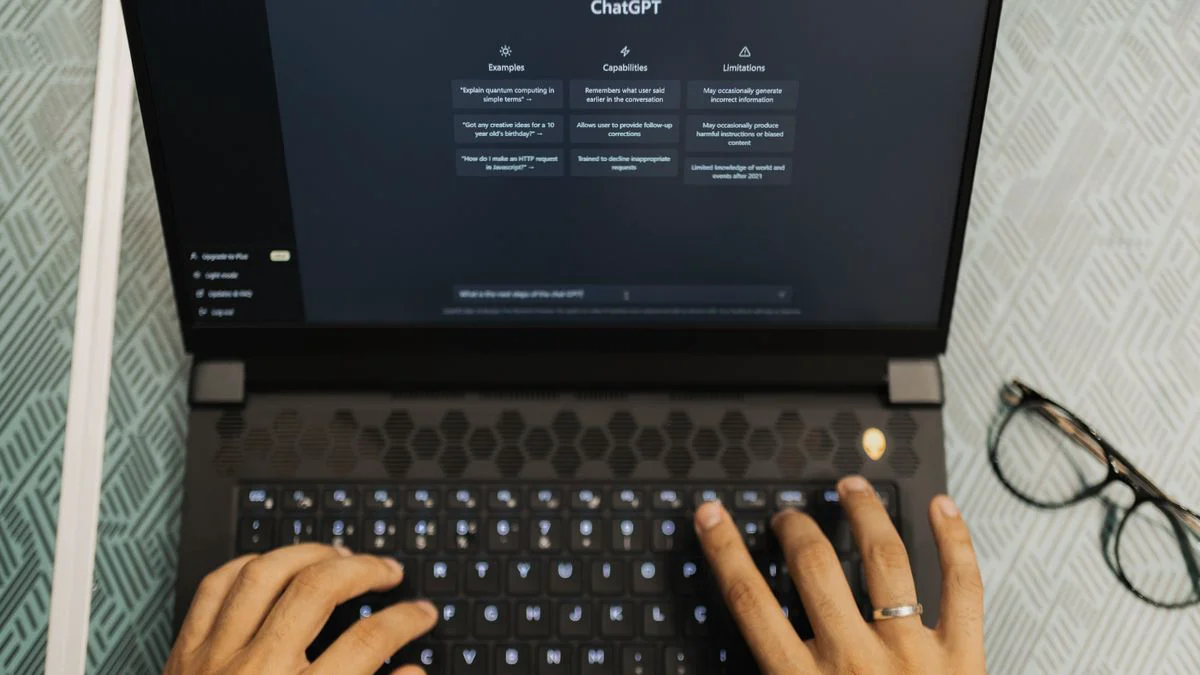
For example, a website owner might ask, “What platforms can publish SEO articles directly to my existing website?” That prompt tests whether ChatGPT links a brand to publishing workflows, REST API delivery, content automation, and organic growth. A separate prompt like “Which tools help SaaS teams rank for customer search queries?” tests a different association, although the buyer need is close.
How buyer prompts shape visibility in ChatGPT
AI brand mentions differ from traditional brand monitoring in 3 clear ways. First, the mention may happen inside a generated answer, not on a public webpage. Second, the answer may include a brand without citing a source. Third, the output can change when the prompt adds context, such as company size, country, budget, or buyer role.
ChatGPT visibility also sits beside other answer surfaces. Google AI Overviews and AI Mode may draw from indexed web pages and search results. Perplexity often displays citations more clearly. Meanwhile, Gemini, Copilot, Claude, and ChatGPT may each treat the same brand differently because they use different retrieval patterns, training data, browsing behavior, and safety rules.
Why entity clarity matters
Generative Engine Optimization is a term often used for making a brand easier for AI systems to understand, verify, and include in generated answers. For ChatGPT, the work starts with entity clarity. The brand needs a clear category, a short value proposition, visible use cases, and enough supporting proof across its own site and outside sources. ChatGPT visibility improves when those signals repeat in plain language.
Good to know: A useful first benchmark uses 30 prompts split into 5 groups: category, problem, use case, comparison, and buying criteria. If a brand appears in 3 of 30 prompts, its starting ChatGPT visibility rate is 10% for that test set.
Why does ChatGPT associate some topics with your brand and not others?
ChatGPT associates a brand with topics when repeated signals describe the brand in consistent language across pages, sources, and prompts. If a brand says “SEO automation” on one page, “AI writing” on another, and “content operations” everywhere else, ChatGPT may not know which buyer problem the brand owns.
Topic patterns behind AI visibility in ChatGPT
Topic association works like a web of evidence. A brand becomes easier to mention when its homepage, product pages, blog posts, customer examples, schema markup, reviews, and third-party discussions all point toward the same category. In practice, the pattern matters more than one polished page. One landing page rarely gives enough depth for many buyer prompts.
Consider two brands with similar products. Brand A publishes answer-first pages that explain “automated content research,” “direct publishing to WordPress,” “AI search visibility,” and “SEO reporting.” Brand B publishes one broad page that says it helps with marketing growth. Therefore, ChatGPT has more specific hooks for Brand A because each page ties the brand to a named buyer task.
How AI Share of Voice exposes gaps
AI Share of Voice is the percentage of relevant prompts where a brand appears compared with other brands in the same answer set. If 10 prompts produce 50 total brand mentions and one brand appears 8 times, that brand has a 16% AI Share of Voice for that sample. The number is not universal, yet it shows whether the brand gains ground inside the tested topic set.
Search demand should guide prompt priority. A prompt about “best SEO automation software” carries more business value than a vague prompt about “marketing ideas” because the buyer intent is clearer. Therefore, teams should weight prompt groups by revenue relevance, not just by mention count. ChatGPT visibility should connect to buyer value, not vanity tracking.
Freshness also affects association. If a brand changed positioning recently, older pages and old third-party references may still describe the previous category. ChatGPT can reflect that lag, especially when outside pages use outdated copy. A regular content update cycle helps keep category language stable.
ChatGPT does not reward a brand for saying more. It rewards a brand that becomes easier to place, compare, and verify.
How do content, citations, and third-party sources influence ChatGPT answers?
Content, citations, and third-party sources can influence ChatGPT answers by giving the model clearer text to extract and stronger evidence to use. A strong pattern combines answer-first owned content, crawlable technical structure, and off-site corroboration from sources that buyers already use.
Answer-first content and citation signals
Answer-first content gives ChatGPT a clean passage to reuse. A strong page opens with a direct definition, then explains use cases, steps, proof, limits, and examples. For instance, a page about AI search visibility should state what the term means in the first sentence, then show how to test prompts, track citations, and improve entity signals. That format supports ChatGPT visibility because the answer has less work to do.
Citations work differently from mentions. A cited source is a page ChatGPT or another answer engine references as support for a claim. An uncited brand mention is a generated inclusion without a visible source. Both matter, but citations provide stronger evidence because the answer points back to a page that can be inspected.
Off-site corroboration helps because models and retrieval systems can look beyond a brand’s own claims. Review-style articles, media roundups, industry directories, podcast pages, comparison pages, YouTube transcripts, and community threads can all add context. Reddit and Quora discussions can surface real buyer language, while YouTube videos often provide transcripts that repeat category terms in a natural way.
Community proof and technical access
Forum and social visibility need care. Reddit, Quora, TikTok, and niche communities can help a brand become part of real discussion, but fake praise creates risk. Ethical participation means answering questions, disclosing affiliation where needed, avoiding scripted claims, and letting customers speak in their own words. One useful rule is simple: a comment should still help the reader if every brand name is removed.
Google visibility and Bing visibility also matter because some AI answers use live retrieval from search indexes. Google Search Console can show whether pages get impressions for target queries. Bing Webmaster Tools can reveal indexing and crawl issues that may affect Bing-powered surfaces, including Copilot. Bingbot access, page status, canonical tags, and sitemap health all affect whether content becomes retrievable.
Technical access sets the floor. GPTBot, other AI crawlers, and search crawlers need permission to access public pages. robots.txt rules can block them, while noindex tags can remove useful pages from search discovery. If you suspect crawl access issues, check whether AI crawlers can reach key pages with an AI crawler access check before rewriting content. These checks protect ChatGPT visibility from avoidable technical blocks.
Llms.txt is a site file that can point AI systems toward important pages and context. It does not guarantee inclusion, and it is not a ranking switch. Still, a valid file may make a website easier to parse when paired with clear content, strong internal links, and stable product language. Seonix offers a fast way to create a valid llms.txt file for teams that want clean AI-readable guidance.
Industry-specific source maps for citations
Different industries need different proof sources. A SaaS brand should map product pages, comparison content, developer docs, review-style lists, integration pages, and YouTube demos. A local service brand may need directories, service-area pages, before-and-after photos, customer reviews, and community discussions. A professional services firm may need author bios, case pages, conference talks, and detailed explainers.
The source map should include 4 columns: source type, buyer question, proof format, and update owner. For a SaaS company, a YouTube demo might answer “How does the workflow work?” while a documentation page answers “Can it connect to my website?” For an agency, a case page might answer “What changed after 90 days?”
Watch out: Third-party proof works best when it confirms a specific claim. A broad “best tool” mention helps less than a source that says the brand publishes SEO content, tracks rankings, and supports direct website integrations.
How can you test visibility in ChatGPT with prompt-level evidence?
You can test ChatGPT visibility by running a fixed prompt set, saving the exact outputs, and comparing brand mentions, citations, and answer language before and after improvements. The test should use stable prompts, the same user context, the same date format, and screenshots or exports for every result.
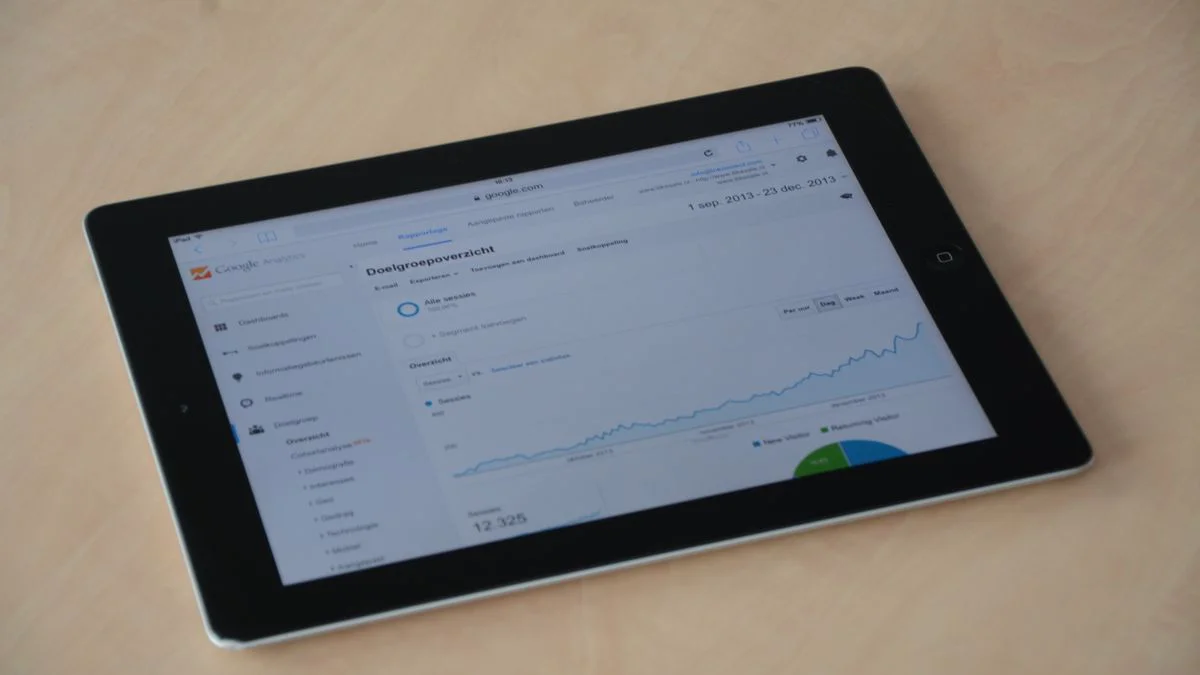
Start with prompt groups rather than random questions. A 40-prompt sample can include 8 category prompts, 8 use-case prompts, 8 competitor prompts, 8 problem prompts, and 8 buying-criteria prompts. This size is small enough to repeat monthly and large enough to show patterns. For stronger analysis, run each prompt 3 times and record variation.
Prompt-level visibility tracking across AI engines can add context, but keep this article’s core test focused on ChatGPT. A second column can note whether the same prompt also triggers mentions in Google AI Overviews, Perplexity, Gemini, Copilot, Claude, or AI Mode. That engine-by-engine view helps identify whether the issue is ChatGPT-specific or a broader authority gap.
Save evidence in 4 forms. First, capture the full prompt text. Second, save the full answer with visible date and account context. Third, mark whether the brand appeared, was cited, or was missing. Finally, record which competitor brands appeared and what reason the answer gave. This creates a proof pack that a team can revisit after content and authority work.
Before-and-after proof should avoid vague claims like “visibility improved.” A stronger statement looks like this: before work, the brand appeared in 4 of 40 prompts and was cited in 1 answer; after 90 days, it appeared in 13 of 40 prompts and was cited in 5 answers. The exact numbers depend on the brand and market, but the format keeps the evidence clear.
Prompt types that reveal category, use case, and competitor understanding
Category prompts test whether ChatGPT knows the market box a brand belongs in. Example: “What tools help B2B SaaS companies automate SEO content production?” Use-case prompts test job-fit. Example: “What platforms can research customer queries, write optimized articles, and publish them to an existing website?”
Competitor prompts test shortlist behavior without turning the test into a ranking contest. Example: “What alternatives should a marketing team compare when choosing an SEO automation platform?” Problem prompts test pain recognition. Example: “How can a small marketing team grow organic traffic without managing keyword research and content publishing manually?”
Buying-criteria prompts expose whether ChatGPT understands decision factors. Example: “Which SEO content platforms support direct website publishing, performance tracking, and content updates over time?” A brand that appears for the broad category but disappears for integration prompts has a content gap around publishing workflows.
Before-and-after prompt evidence examples
Before example: “Recommend tools that help a founder publish SEO articles automatically.” The output names several generic content tools and says “also consider hiring a writer.” The brand is missing, and no answer mentions direct publishing, AI visibility, or ongoing rank tracking. This suggests ChatGPT does not connect the brand to the buyer task.
After example: the same prompt produces a shortlist that includes the brand, describes it as an SEO automation platform, and mentions content research, article creation, direct publishing, and tracking. If the answer cites a product page or a detailed article, the proof is stronger. If the brand appears without a citation, the team should still save the answer but mark it as an uncited mention.
A second before example can test category confusion. Prompt: “What tools help companies appear in ChatGPT answers?” If the answer names brand monitoring tools only, the model may not connect content publishing with AI answer visibility. After publishing answer-first content about earning and measuring AI mentions, the same prompt may include brands that explain both content signals and measurement proof. For the broader strategy, see this guide on earning measurable mentions in AI answers.
ChatGPT signals for visibility to diagnose first
ChatGPT visibility can improve faster when teams diagnose signals in the right order. Start with technical access, then check entity clarity, answer-first content, citation support, off-site corroboration, user-generated discussion, and measurement quality. A weak crawl setup can block progress, while weak source proof can keep a brand out of recommendation prompts.
| Signal area | What to check | Prompt evidence to save | Priority action |
|---|---|---|---|
| Technical access | robots.txt, GPTBot, noindex | Missing despite exact-match prompts | Fix crawl rules |
| Entity clarity | Category, use cases, names | Wrong category descriptions | Align brand language |
| Answer-first content | Definitions, steps, examples | No citation for owned pages | Rewrite key pages |
| Third-party proof | Reviews, roundups, media | Competitors cited more often | Build corroboration |
| UGC discussion | Reddit, Quora, forums | No community context | Join ethical discussions |
| Video signals | YouTube titles, transcripts | Use cases missing in answers | Publish demos |
| Measurement | Prompt set, dates, screenshots | Unrepeatable tests | Create proof pack |
Technical access checks for ChatGPT visibility
The first diagnostic question is technical: can crawlers access the pages that explain the brand? robots.txt should not block key search crawlers or AI-related crawlers you want to allow. Key pages should return 200 status codes, use canonical tags correctly, and avoid accidental noindex tags. Technical checks may take 30 minutes for a small site and several hours for a larger site with many templates.
Content clarity checks
The second question is content clarity. ChatGPT needs pages that answer buyer questions directly. A page titled “Solutions” may not give enough context. A page titled “Automated SEO content publishing for SaaS teams” gives stronger signals because it names the task, audience, and category.
Outside proof checks
The third question is outside proof. If competing brands have multiple visible review-style sources and your brand has very few, ChatGPT may mention them first because outside pages confirm their category fit. That does not prove causality in every answer, but it shows a measurable gap worth closing.
Rule of thumb: treat any prompt group with low brand inclusion as a priority gap if the prompts match high-intent buyer questions.
What should you do when competitors are named before you?
When competitors are named before your brand, diagnose the reason before publishing more content. The cause usually falls into one of several areas: clearer category language, stronger citation footprint, more off-site corroboration, or better fit between their pages and the buyer prompt.
Competitor gap work should compare signals, not just names. Save the prompt, the answer, every named brand, cited sources, and the explanation ChatGPT gives for each brand. If ChatGPT praises a competitor for integrations, pricing clarity, tutorials, or reviews, turn that explanation into a content and proof checklist for your own site.
AI Share of Voice is useful here because it reduces emotion. If your brand appears in 6 of 40 prompts and a competitor appears in 22, the gap is visible. Yet the next question matters more: which 16 prompts create the gap? Category prompts may show weak entity recognition, while review prompts may show a lack of third-party proof.
Do not copy competitor positioning. Instead, look for missing buyer language. If ChatGPT says another brand suits “small teams that need automation,” your site should prove where your own product fits small teams, what gets automated, and how outcomes get tracked. For deeper competitive benchmarking without drifting from this diagnostic, use Outrank Competitors With an AI Visibility Benchmark.
How to separate citation gaps from mention gaps
A mention gap exists when ChatGPT does not name your brand for relevant prompts. A citation gap exists when ChatGPT names your brand but cites other pages, or cites competitors more often. These gaps need different fixes, so mixing them creates wasted work.
If the brand is never mentioned, improve entity clarity and source breadth first. If the brand appears but lacks citations, improve extractable owned pages and make sure search indexes can access them. If competitors appear with citations from review-style pages, off-site authority may be the missing layer.
Use 3 labels in the evidence sheet: “mentioned and cited,” “mentioned without citation,” and “not mentioned.” Add a fourth label, “cited without favorable mention,” when an article becomes a source but the brand is not recommended. That case often signals useful content but weak brand fit.
Buyer-readiness score for AI mention work
A simple buyer-readiness score helps teams decide whether to invest in ChatGPT visibility now. Score 5 areas from 0 to 2: technical access, clear positioning, answer-first content, third-party proof, and measurement process. A total score of 0 to 4 means fix foundations first. A score of 5 to 7 supports a focused 90-day improvement plan. A score of 8 to 10 means the brand can start competitive testing and source expansion.
For example, a SaaS company with crawl access, clear product pages, and 12 strong blog posts may score 6 if it lacks review-style sources and prompt evidence. The next step is not 50 more posts. The next step is better proof distribution and a fixed measurement set.
How should you run a 90-day rollout for ChatGPT visibility?
A 90-day rollout should move from diagnosis to content fixes, then to authority building and measurement. The goal is not to force ChatGPT to mention a brand. The goal is to make the brand easier to understand, verify, and match to buyer prompts. ChatGPT visibility improves when each month has a clear job.
Month 1 should focus on measurement and technical readiness. Build the 30 to 50 prompt set, run the baseline, save screenshots, audit robots.txt, check GPTBot and Bingbot access, review Google Search Console, and inspect Bing Webmaster Tools. Also confirm that important pages are indexed and not blocked by page templates.
Month 2 should focus on answer-first content. Rewrite high-value pages so each one opens with a direct answer, defines the topic, covers use cases, includes examples, and links related pages clearly. Add schema markup where it helps describe articles, products, FAQs, and organization details. If indexing appears weak, use this guide to diagnose missing AI answer visibility before assuming the content itself failed.
Month 3 should focus on corroboration and proof. Pursue review-style coverage, update partner pages, add demo videos to YouTube, document customer use cases, and participate in relevant community discussions with clear disclosure. Then rerun the same prompt set. Save the full before-and-after proof pack rather than relying on memory.
One ordered workflow for monitoring improvement
- Define 30 to 50 prompts across category, problem, use case, comparison, and buying-criteria intent.
- Run each prompt in the same ChatGPT setup and save the full answer with the date.
- Label every result as mentioned and cited, mentioned without citation, cited only, or not mentioned.
- Audit crawl access, indexing, entity clarity, answer-first pages, and off-site proof sources.
- Publish or update the highest-impact pages and sources during a 30-day work cycle.
- Rerun the same prompts monthly and compare visibility, citations, and answer language.
The workflow stays useful because it separates measurement from opinion. A marketer may feel progress after publishing 10 articles, but ChatGPT may still miss the brand on integration prompts. A fixed test set shows whether the work changed buyer-facing answers.
Automated content research, writing, and publishing can reduce manual work in this cycle. Seonix analyzes customer search queries, generates optimized articles, publishes them to existing websites through integrations, and tracks performance over time. Teams that want the operational version can review how the workflow moves from URL to published content.
Execution options for improving visibility in ChatGPT
Businesses can improve ChatGPT visibility with an internal team, a specialist service, a general agency, freelancers, or an automated SEO platform. The right option depends on volume, technical needs, content quality control, and how much work the team wants to manage.

Team-led execution
An internal team works well when the company already has SEO, content, PR, and developer capacity. The upside is direct control. The downside is coordination. A strong rollout may need several roles, such as an SEO lead, content strategist, writer or editor, developer, and PR or partnerships owner.
A specialist service can help when the company needs strategy, measurement, content, and off-site proof in one motion. A general marketing agency may suit brands that also need paid media, design, or broader campaign work. Freelancers can be cheaper for one-off content updates, but they rarely cover technical crawl checks, prompt evidence, and authority building together.
Automation-led execution
An automated SEO platform fits teams that need steady content output and tracking without managing every manual step. Seonix focuses on SEO automation and organic growth, including content research, writing, optimization, publishing, and performance tracking. For SaaS teams, this model can support high-volume article delivery while keeping the workflow tied to search and AI visibility goals.
| Option | Best fit | Main strength | Main limit |
|---|---|---|---|
| Internal team | Large marketing function | Direct control | High coordination |
| Specialist service | Focused AI visibility push | Strategy plus proof | Needs clear scope |
| General agency | Broad marketing program | Many channels | Less focused testing |
| Freelancers | Small content tasks | Flexible capacity | Fragmented ownership |
| SEO automation platform | Ongoing content scale | Publishing and tracking | Needs source strategy |
The honest concession is simple: if a company needs only 1 page rewritten or 1 video transcript cleaned up, a freelancer is often the lighter choice. If the goal is a steady stream of optimized articles each quarter, direct publishing, and ongoing rank tracking, automation becomes more attractive because manual coordination grows fast.
Practical recommendations to raise AI search visibility and brand mentions
The fastest wins often come from fixing the signals that block clear association. Start with crawlability and page clarity, then build evidence across owned content, third-party sources, video, and community discussion. ChatGPT visibility work should produce proof every month, not just new assets.
Use these recommendations as a practical working list:
- Rewrite key pages so the first 40 words answer the buyer’s question directly.
- Create one page for each high-value use case, such as direct publishing or automated content tracking.
- Add schema markup for organization, article, product, and FAQ details where the page supports it.
- Check robots.txt, canonical tags, noindex rules, GPTBot access, and Bingbot access before scaling content.
- Publish YouTube demos with clear titles, chapters, and transcripts that mention the buyer problem.
- Build review-style and partner proof that confirms the brand’s category and use cases.
- Participate in Reddit, Quora, and niche forums only where the answer genuinely helps.
- Save screenshots before and after each monthly prompt test.
Prompt fan-out helps uncover hidden gaps. A single buyer question can create 5 related prompts: “best tools,” “alternatives,” “how to solve,” “what should I compare,” and “which option fits a small team.” If the brand appears in only 1 of the 5, the topic association is thin.
Search demand weighting keeps the work commercial. A low-volume but high-intent prompt like “publish SEO articles to existing website automatically” may matter more than a broad prompt like “marketing automation ideas.” Buyer-readiness beats raw prompt count because revenue depends on fit.
Freshness should be visible. Update key pages when product features change, when integrations expand, or when the brand shifts positioning. For many teams, a 60 to 90 day review cycle is enough for core pages, while fast-moving comparison pages may need monthly edits.
Tip: Save a proof pack with 4 items for every prompt: prompt text, answer screenshot, mention status, and citation status. A 40-prompt test creates 160 evidence fields, which is enough to show direction without turning measurement into a full research project.
What evidence should you save before and after visibility work?
Save evidence that proves what ChatGPT said, when it said it, and which sources or competitors appeared. The minimum proof pack includes prompt text, answer screenshots, citation links shown in the interface, account settings, date, country context, and a label for mention status. Strong evidence makes ChatGPT visibility easier to defend in planning meetings.
Evidence must be prompt-level because broad dashboards can hide weak spots. A dashboard may show a 25% visibility rate, yet the brand may still miss all buying-criteria prompts. The proof pack should keep each prompt separate so the team can see which buyer questions changed.
Before work, save the baseline even if the results look poor. Poor baselines make improvement measurable. After work, rerun the same prompt set and keep any changed wording. If ChatGPT starts describing the brand with the exact category language used on updated pages, that can be a sign the signal became clearer.
Cited sources need special tracking. Save the visible citation page, the claim it supports, and whether the citation is owned, third-party, video, forum, or review-style. If ChatGPT cites a Reddit thread for a product comparison, the team should know whether that thread is accurate, old, biased, or missing key context.
An engine-by-engine reporting template can use 6 columns: engine, prompt, brand status, citation status, competitor names, and answer reason. For ChatGPT-specific work, keep ChatGPT as the main view and use Perplexity, Gemini, Copilot, Claude, Google AI Overviews, and AI Mode as context. That prevents the project from drifting into broad AI tracking.
Trend reporting should run on a fixed cadence. Monthly is practical for most teams because content updates, crawl changes, and new sources need time to surface. Weekly tests can be noisy, while quarterly tests may miss problems that need a faster fix.
Limits, risks, and reliability checks
ChatGPT visibility is measurable, but it is not fully controllable. The same prompt can return different answers across sessions, accounts, regions, model versions, and browsing states. A reliable process accepts variation and uses repeated samples instead of one answer.
Paid mentions are not a shortcut inside ChatGPT answers. A brand can buy ads in some search and social contexts, but generated recommendations still depend on available evidence, user prompt wording, and system behavior. Paid sponsorships on third-party pages can support awareness, yet they should be labeled and should not replace real proof.
Measurement reliability improves when the team keeps conditions stable. Use the same prompt text, same account type, same country setting where available, same date format, and the same evidence labels. If the interface shows citations for one run and not another, record both rather than deleting the weaker result.
Content quality also has limits. Publishing 100 thin articles can dilute signals if the pages repeat the same claims without useful examples. A smaller set of 20 strong pages can outperform a larger set when each page answers a distinct buyer question and links to relevant proof.
Community participation carries reputational risk. Reddit and Quora users often reject promotional answers, and moderators may remove posts that look like ads. Ethical rules protect the brand: disclose affiliation, answer the actual question, avoid vote manipulation, and do not ask employees to pose as customers.
Procurement should include evidence requirements. If a provider offers ChatGPT visibility work, ask what prompt sample they will test, how they label citations versus mentions, which technical checks they include, and what deliverables arrive by month. A credible plan should define the first 30, 60, and 90 days, not just promise more AI mentions.
The decision that matters most
The key decision is whether to treat ChatGPT visibility as a content, authority, technical, and measurement system rather than a one-time prompt test. ChatGPT needs enough clear signals to understand what the brand does, enough proof to trust the association, and enough prompt evidence for the team to see progress.
Start with a fixed prompt set and a clean baseline. Then fix crawl access, sharpen answer-first pages, map source gaps, and build ethical third-party corroboration. If the brand is already strong in search but weak in ChatGPT answers, the issue may not be traffic. The issue may be that AI systems cannot connect the brand to the exact buyer tasks that matter.
Seonix fits teams that want this work to run with less manual effort. The platform supports automated content research, writing, optimization, website publishing workflows, and ongoing tracking, which makes it easier to turn buyer questions into visible, measurable content assets.
We trust prompt evidence over internal assumptions. The fastest progress often comes after a team sees the exact wording ChatGPT uses, then fixes the missing proof behind that wording. That discipline keeps AI visibility work grounded in buyer questions rather than guesses, the team at Seonix.
FAQ
These answers cover the most common checks teams ask about after a first prompt audit.
What kinds of prompts reveal whether ChatGPT understands a brand's category, use cases, and competitors?
Use category prompts, use-case prompts, competitor prompts, problem prompts, and buying-criteria prompts. For example, ask which tools solve a specific buyer problem, which platforms fit a named company type, and which alternatives belong on a shortlist. Save whether ChatGPT names the brand, how it describes the brand, and which competing brands appear.
How do answer-first content, off-site corroboration, Reddit discussions, YouTube content, and review-style sources support ChatGPT visibility?
Answer-first content gives ChatGPT clear passages to extract. Off-site corroboration confirms that the brand’s claims appear beyond its own website. Reddit discussions and other forums show real user language, while YouTube transcripts add use-case context. Review-style sources can help ChatGPT compare brands when buyer prompts ask for shortlists.
How should a business distinguish a cited source from an uncited brand mention?
A cited source appears as a visible reference supporting the answer. An uncited brand mention names the brand without showing a supporting page. Track both, but label them separately. A cited mention gives stronger proof because the team can inspect the source, improve the page, and see whether the claim matches current positioning.
What evidence should be saved before and after visibility work?
Save the prompt text, full answer screenshot, date, account context, country context, visible citations, brand mention status, and competing brands. Before work, this creates the baseline. After work, rerun the same prompts and compare mention rate, citation rate, answer wording, and competitor presence across the same sample.
Can businesses pay to appear in ChatGPT answers?
Businesses cannot rely on paid placement to force organic ChatGPT recommendations. Ads and sponsorships may exist in other channels, but generated answers still depend on prompt wording, source access, content clarity, and available proof. Treat paid media as separate from organic AI mention work, and label sponsored third-party content clearly.
How long does ChatGPT visibility improvement take?
A practical first cycle can take around 90 days: 30 days for diagnosis and technical checks, 30 days for content updates, and 30 days for authority and proof building. Some changes may appear sooner, especially after crawl fixes. Stronger mention and citation patterns need repeated testing over several monthly runs.
If you want to turn ChatGPT visibility diagnostics into a repeatable growth system, review the current plans for SEO content on autopilot. Seonix can help you move from prompt evidence to published, tracked content without managing every SEO task manually.