Organic search still drives some of the highest-intent website visits, yet most teams struggle to publish enough useful pages to win consistent rankings. A seo automation platform changes that equation by turning research, content production, optimization, publishing, and performance tracking into one repeatable system. Instead of treating SEO as a slow manual project, businesses can run it as an always-on growth engine.
This matters now because search behavior has changed fast. Google still sends valuable traffic, but AI answer engines such as ChatGPT and Gemini increasingly shape discovery before the click. At the same time, factors such as content velocity, topical coverage, internal structure, and technical quality can influence whether a brand earns visibility across both classic results and AI-generated summaries.
This guide explains how an AI-powered SEO system works, what features separate strong products from weak ones, and how to judge whether automation will actually produce qualified traffic. You will also see practical evaluation criteria, real operating scenarios, and a clear framework for choosing a platform that fits your site, team, and growth targets.
What a seo automation platform actually does
A true seo automation platform does much more than write blog posts. It connects to your website, studies existing pages, identifies search opportunities, creates content around those opportunities, optimizes structure and on-page elements, publishes new assets, and monitors performance over time. The best systems also support visibility beyond blue links by shaping content for AI answer retrieval and brand mention discovery.

That distinction matters because many tools call themselves AI SEO products while solving only one task. One app may generate article drafts but leave research, editing, internal links, schema, and publishing to your team. Another may handle technical audits but produce no content. In practice, operators often see the most impact when one system covers the whole workflow instead of handing work back to humans after every step.
How a seo automation platform supports end-to-end execution
Consider a local legal firm with 40 service pages and little blog activity. A basic writing tool might produce 20 articles, but the firm still needs someone to map search intent, prevent overlap, add internal links, publish correctly, and track gains. By contrast, an automation-first setup can identify query clusters such as personal injury timelines, settlement factors, and claim mistakes, then publish around them in a structured sequence that supports both rankings and conversion pages.
Strong platforms usually automate six layers at once:
- Site analysis and topic discovery
- Keyword clustering by intent and business relevance
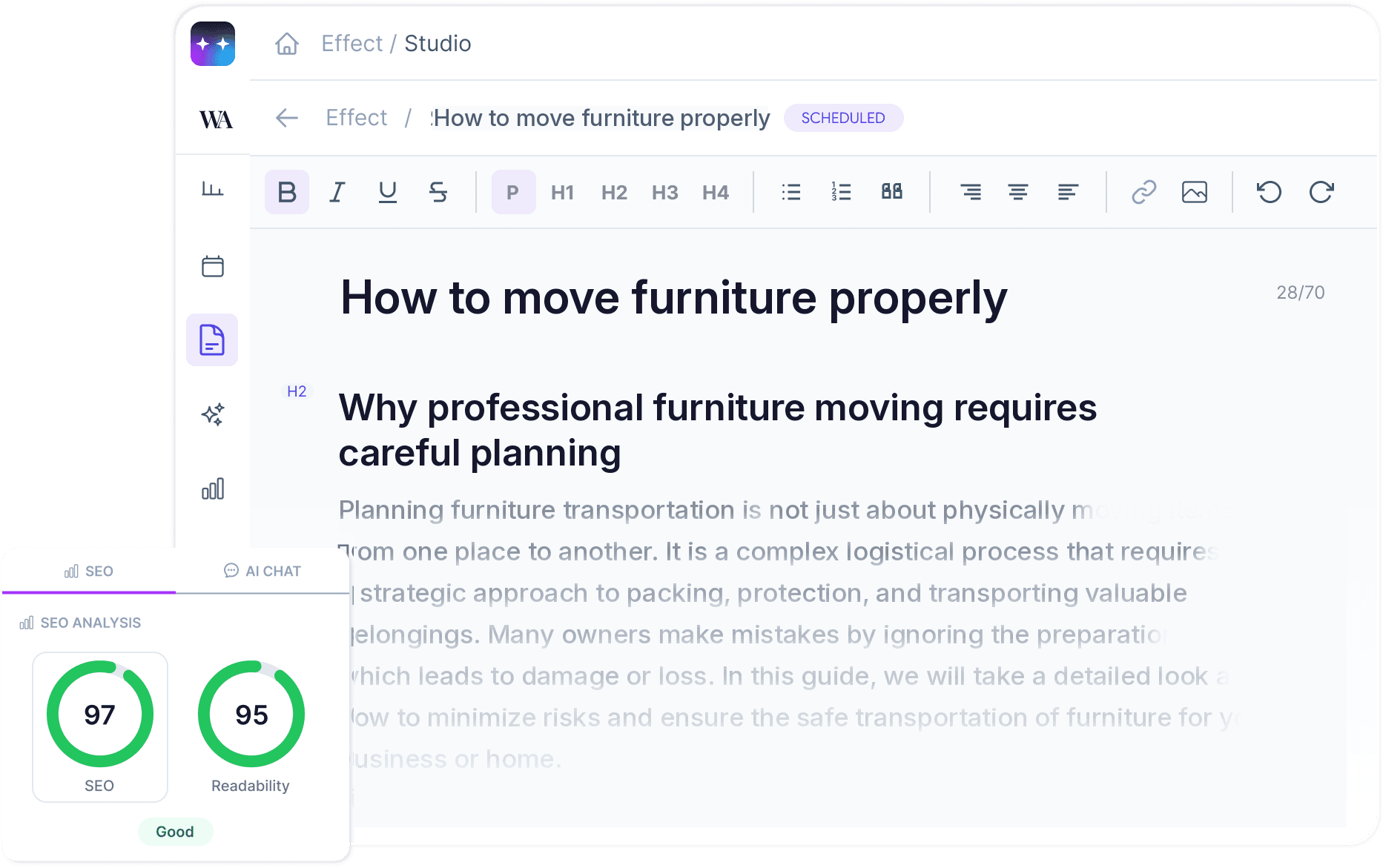
- Content generation with SEO structure built in
- On-page optimization for titles, headings, entities, and links
- Publishing to the connected website
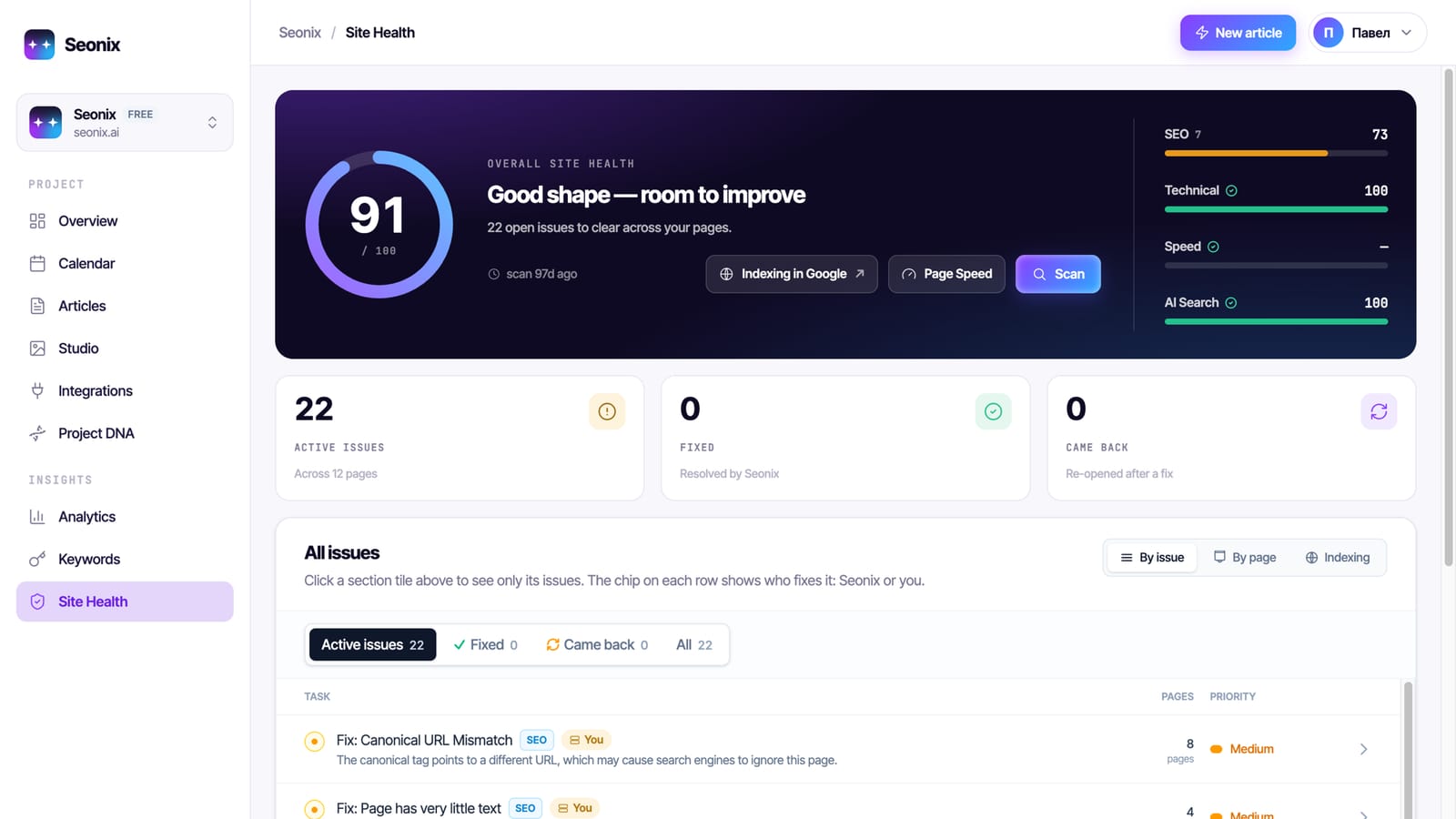
- Performance tracking for rankings, traffic, and page growth
Seonix positions itself in this fuller category. It analyzes a connected site, finds customer queries, generates content around those gaps, publishes automatically, and keeps optimizing for both search engines and AI answers. For a business owner, that reduces the need to manage freelancers, keyword sheets, CMS uploads, and scattered reporting tools.
Why modern search demands automation, not occasional SEO
Search visibility now depends on consistency more than one-off campaigns. A site that publishes a few articles each quarter rarely covers enough intent variation to compete against domains adding targeted content every week. Moreover, ranking systems reward freshness in some verticals, but they often reward depth and complete topic coverage as well.
AI answer systems raise the bar further. They pull from sources that appear clear, trustworthy, and topically rich. Therefore, brands need well-structured pages, precise language, supporting subtopics, and repeated evidence of expertise across the site. Manual workflows struggle to maintain that pace, especially for companies without a full content team.
Why manual SEO loses momentum
A practical example makes this clearer. Imagine a B2B software company selling payroll tools in three countries. Each market has different regulations, different search terms, and different customer questions. A manual team might publish one generic article on payroll compliance. An automated system can identify dozens of intent-specific opportunities, such as tax filing deadlines, contractor classification, payslip requirements, and onboarding checklists, then build a content map that supports product pages across regions.
In many SEO workflows, bottlenecks usually appear in three places: research, production, and publishing. Each bottleneck slows compound growth. If topic discovery takes two weeks, draft production takes another two, and CMS upload waits for approvals, a company may lose months before a page even enters indexation. Automation compresses that cycle, which often matters more than small gains in copy polish.
How automation improves output economics
There is also a cost issue. Suppose a company pays for a strategist, writer, editor, SEO specialist, and content uploader to ship 30 articles each month. That process can work, but overhead rises fast. A platform-led workflow can lower unit cost per page because the system handles repetitive tasks at scale. If you want a broader view of how automated workflows support scale, this piece on content automation tools gives a useful adjacent perspective.
Core features that separate a strong seo automation platform from a weak one
Not all platforms deserve the same trust. Some generate readable text but miss search intent. Others detect keywords but create generic pages that never rank. The difference usually comes down to feature depth and how tightly those features work together.
Opportunity discovery in a seo automation platform must start with your site, not a blank prompt
The best systems do not begin with random keyword lists. They analyze your existing pages, internal structure, brand positioning, and topic gaps first. As a result, they can avoid cannibalization and target opportunities that support actual revenue pages.
For example, an HVAC business may already rank for “AC repair” but miss long-tail searches around frozen coils, thermostat issues, repair costs, and seasonal maintenance. A useful platform finds those gaps automatically and connects them to the service pages that need more support. That approach produces stronger topical relevance than publishing disconnected articles chosen only by search volume.
Content generation should reflect search intent and entity depth
Good AI content is not just fluent writing. It needs the right heading hierarchy, topic coverage, semantic terms, concise answers, and conversion alignment. In practice, pages often fail because they answer the wrong intent or ignore the supporting questions users expect to see.
A strong system creates pages that match whether the query is informational, commercial, local, or transactional. It also includes related concepts naturally, which can help pages appear more complete to both search engines and AI answer systems. For instance, an article about emergency plumbing should likely mention response times, common causes, cost factors, and insurance considerations rather than repeat the same target phrase.
Publishing automation matters more than many teams expect
A draft sitting in a dashboard has zero traffic value. That sounds obvious, yet many businesses stall at the last step because SEO work never reaches the live site. Therefore, direct CMS publishing, scheduling, formatting, and internal linking automation should be core buying criteria.
One mid-sized service business can easily lose four to six hours per week just moving finished copy into WordPress, checking headers, adding links, and formatting lists. A platform that includes a real content publishing service style workflow removes that friction and keeps output consistent.
Performance tracking in a seo automation platform must connect effort to outcomes
Vanity metrics create false confidence. Word count, draft volume, and raw keyword counts tell you very little on their own. Strong platforms show how many pages were published, which terms gained visibility, what traffic arrived, and how the content supports business pages over time.
In practice, look for tracking across at least these indicators:
- New pages published per month
- Keywords entering the top 3, top 10, and top 20
- Organic sessions by page cluster
- Indexation status and crawl health
- Internal link distribution to money pages
- Presence in AI-discoverable answer formats
If the reporting screen cannot show movement from opportunity to publication to ranking, you are probably buying a content toy rather than an operating system.
How AI visibility changes the role of an seo automation platform
Traditional SEO focused on ranking pages for typed searches. That still matters, but AI visibility adds another layer. Your content now needs to be useful not only for a click from Google, but also for citation, summarization, and brand mention in AI-generated responses.

How content structure supports AI retrieval
That shift changes how platforms should create content. Pages need direct answers near the top, strong subheadings, factual clarity, and language that clearly explains relationships between concepts. They also need broad topic coverage across the site, because AI systems may favor sources that repeatedly demonstrate authority around the same subject.
Here is a practical scenario. A dental clinic may want to rank for “Invisalign cost,” but it also wants to appear when someone asks an AI assistant, “What affects Invisalign pricing?” A weak article might stuff the term into headings and offer generic advice. A stronger page would explain cost drivers such as case complexity, geographic market, treatment length, retainers, and insurance variables in clear sections. That structure helps both search crawlers and answer models interpret the page.
Why topic clusters matter for AI visibility
AI visibility also depends on consistency across the site. If your domain publishes one solid page on a topic but nothing around related questions, you may still struggle to appear in synthesized answers. An automation platform helps by building content clusters rather than isolated posts. It can publish a pricing explainer, aftercare guide, timeline article, eligibility page, and comparison piece, each reinforcing the same expertise area.
Another factor is brand mention presence. Searchers often trust businesses they have seen referenced across multiple surfaces. Some platforms now support broader web signals, helping brands become more visible beyond their own site. While results vary by niche, that wider footprint can improve discoverability in systems that synthesize information from several sources.
Why scale changes the outcome
The key point is simple: AI answer engines reward structure, clarity, and depth at scale. Manual teams can produce that output, but they usually do so slowly. A platform built for both search and answer visibility can keep your site publishing in the format modern discovery systems prefer. The right seo automation platform makes that process repeatable instead of reactive.
What results to expect from a seo automation platform
A good platform should improve speed, output, and visibility. However, results depend on site age, authority, competition, publishing volume, and content quality. Claims of instant page-one rankings deserve skepticism. More credible providers talk about trend lines, indexation growth, topic coverage, and measurable gains over several months.
For newer sites, the first wins often appear in indexation, long-tail rankings, and broader keyword footprint. For established domains, gains may come from filling topic gaps, refreshing stale coverage, and linking support content to existing service or product pages. In many SEO workflows, months two through six often reveal whether the system is building real momentum or simply adding content without traction.
Early traction and growth patterns
Take a home services company that publishes 12 optimized pages per month around high-intent local problems. In month one, it may only see a few terms enter the top 30. By month three, several pages can begin ranking for long-tail variants, while internal links strengthen the service pages they support. By month six, the site may own a larger share of neighborhood, problem-based, and cost-related searches, especially if technical setup and local trust signals are already sound.
Expect the strongest ROI in these situations:
- Your site already has clear products or services but thin informational coverage
- Your team struggles to publish consistently
- You have many search topics to cover across locations, categories, or use cases
- You need more qualified traffic without hiring a large content team
- You want visibility in both Google results and AI-generated answers
How to think about ROI
It also helps to evaluate commercial efficiency. Compare the monthly platform cost with the cost of producing and publishing the same number of pages manually. Then compare both against the value of one additional lead, sale, or booked demo. If one extra customer per month would cover the platform fee, the decision becomes much easier. For teams weighing budget against output, the available pricing options can help frame that cost-benefit comparison.
How to evaluate and choose the right platform
Selection should start with business fit, not feature count. A platform can have dozens of tools and still fail if it cannot connect to your website, support your publishing process, or map content to revenue goals. Therefore, use a scoring approach that reflects how your team actually operates.

Start with the operating model
Ask whether the platform is hands-off, co-pilot, or tool-only. Hands-off systems do most of the work after setup. Co-pilot systems still expect regular human direction. Tool-only products provide functions but leave execution to your team.
If you run a small business without an SEO manager, hands-off automation usually fits best. If you already have a senior content lead, a co-pilot model may be enough. Problems start when a company buys a tool-only platform but assumes it purchased delivery.
Check integration depth before anything else
Publishing friction kills momentum. Confirm how the platform connects to your CMS, whether it supports custom workflows, and what technical setup is required. If your site runs on a custom stack, API flexibility can matter as much as content quality. Seonix offers custom API integration information for teams that need deeper implementation options.
Also ask how the platform handles page templates, categories, metadata, and internal links. A polished draft loses value if it arrives on the site with broken formatting or weak architecture. During trials, publish at least three real pages and inspect the final output in the live CMS.
Review output quality with commercial intent in mind
Do not judge quality only by how natural the prose sounds. Review whether the pages match intent, support conversion pages, avoid duplication, and answer related questions clearly. A page can read well and still fail because it targets the wrong keyword cluster.
One useful test is to compare three generated articles against top-ranking competitors for the same topic. Check structure, specificity, completeness, and how each page leads readers toward the relevant service or product. If the platform only produces generic educational content, it may drive impressions without business results.
Ask what happens after publication
Many vendors focus heavily on content creation and lightly on improvement loops. You want to know whether the system tracks rankings, identifies underperforming pages, and updates content over time. Search gains often come from iteration, not just first publication.
For example, a fintech site might publish a guide on payment processing fees that reaches position 18. A useful platform should detect that near-win, strengthen subtopics, adjust internal links, or add supporting content to move the page closer to the top 10. That feedback loop often separates durable growth from a one-time content burst.
Use a practical buying checklist
Before you commit, score each option across these criteria:
- Does it analyze your current site before generating topics?
- Can it cluster opportunities by intent and revenue relevance?
- Will it publish directly to your website?
- Does it optimize for both Google rankings and AI visibility?
- Can it track rankings, traffic, and page performance clearly?
- Does it support updates, not just first drafts?
- Is the workflow realistic for your team size?
- Does the cost make sense against expected lead value?
If a vendor cannot answer these points with specifics, keep looking. Clear systems usually explain exactly what they automate, what they measure, and what you still need to handle yourself. A dependable seo automation platform should make those tradeoffs easy to see before you commit.
Practical recommendations for getting the most from automation
Even the best platform performs better with a clean setup and realistic goals. You do not need to micromanage every page, but you should define priorities, conversion targets, and the core topics that matter most to the business. That foundation helps automation focus on the right opportunities first.
Start by identifying your highest-value page types. For many businesses, those include service pages, product categories, location pages, comparison pages, and pricing content. Then build supporting content around the questions that buyers ask before they convert. An automated system can handle volume, but your strategy should still point volume toward revenue.
Rollout steps that keep automation focused
Use this rollout approach:
- Connect the full site and confirm technical access.
- Audit existing content to identify gaps and overlap.
- Prioritize 3 to 5 commercial topic clusters first.
- Publish consistently for at least 90 days.
- Track ranking spread, indexation, and assisted conversions.
- Refresh pages that stall between positions 11 and 25.
- Expand into adjacent clusters once early winners appear.
A real operating pattern often looks like this. A SaaS company starts with integration, pricing, security, and use-case topics because those connect directly to trial signups. After 60 to 90 days, it reviews which clusters gain traction, then adds comparison content and deeper educational pages. That sequencing keeps the early content tied to pipeline, not just traffic.
How to measure progress over time
It also helps to align expectations internally. SEO automation works best as a compounding system, not a one-week campaign. Therefore, track leading indicators early and lagging indicators later. In month one, watch publication count and indexation. In months two and three, watch ranking spread. After that, look harder at traffic quality, assisted conversions, and lift to core money pages.
If you want a simple starting point, the Seonix platform overview shows the operating model behind this kind of hands-off SEO workflow. The main advantage is clear: the platform does the repetitive work while your team stays focused on offers, sales, and customer experience.
Conclusion: choosing a seo automation platform for smarter growth
The right seo automation platform does not just save time. It builds a system for steady content production, stronger rankings, broader topic coverage, and better AI visibility with less manual SEO work. That matters because modern search rewards consistency, structure, and scale far more than occasional publishing pushes.
If you evaluate platforms carefully, focus on site-specific opportunity discovery, publishing automation, performance tracking, and AI-ready content structure. Then measure outcomes against real business goals, not vanity metrics. A strong automation setup can turn SEO from an irregular task list into a dependable acquisition channel that keeps working as your site grows.